by C. M. North
Goodreads has a way of making me feel nervous, joyous and depressed, all at the same time. I love it as a book community, but every time I visit (which is usually several times a day) I can’t help checking for new reviews of 22 Scars, which is where the nervousness comes in - what if there’s a new bad review?
Showing posts with label CM North. Show all posts
January 4, 2019
December 8, 2018
Sharing Passion During the Holiday Season
by C.M. North
Black Friday is so-called, the tale goes, because it was the first day of the financial year that businesses could expect to make a profit - for their ledger to go from red to black. The day after Thanksgiving, when the corporate world was off from work, was a ripe opportunity for the sales world to make a killing.
November 2, 2018
Time, Take Two by @CMNorthauthor
In a stab at shameless self-promotion, I’m going to announce here that I have a new book released this week: written under my pen name, Satis, The Redemption of Erâth: Ancients & Death hits digital shelves on Sunday, and marks the third installment in the ongoing Redemption of Erâth series. It’s a beast, at nearly 600 pages (that’s after a near 25% cut), but I hope that it doesn’t outstay its welcome: a lot happens.
Amazon affiliate links are used on this site.
October 5, 2018
Why Write At All?
by C. M. North
I want to take you on a journey in time for a moment, if I may - all the way back to a young, bright-eyed child, rife with imagination and blissfully ignorant of the limitations imposed by society telling us what is and isn’t possible in life. I mean, of course, me.
September 7, 2018
Shocking Introductions: Crafting the Perfect Start to a Story
by C. M. North
One of the main criticisms levied against my debut novel, 22 Scars, is that it takes a while to get into. It lacks initial momentum, for lack of a better phrase; it starts with a whisper, and although (I like to believe) it builds to a heightened crescendo of emotional turmoil and unexpected revelations, it doesn’t necessarily shout out from the opening lines that this is going to be a story that will reward your emotional investment. Enough people have said it eventually gets there that I want to believe I achieved something at least good, if not great, but it’s certainly taught me a lesson about how to start a book.
June 1, 2018
Judging Books (by their Covers)
by C.M. North
I remember the days of record stores. I remember browsing through records and CDs, trying to find new music that would inspire and connect with me emotionally. It’s very difficult to do that in the age of Spotify and Pandora—after all, these apps promise algorithms that will expand our tastes, but if they’re based on what we already listen to, then how can it truly veer too far from the beaten path?
No—the exquisite experience of visiting a record store was that you would flip through the albums with nothing but the artwork, and maybe the lyric insert, to catch and engage you. There was something magical about taking home an album that could have been electronic trance or Norwegian black metal, and you didn’t know until you put it on and cranked up the speakers. I got some absolute stinkers this way—but I also discovered some beautiful gems, music I would never in a million years have considered listening to.
All because of the cover art.
Art in any form requires some type of judgment; whether it be cursory or in-depth, it invites a critique of its merit, worth and value. When discussing visual art (e.g. painting or photography), that judgment can be fairly instantaneous—it only takes a glance to know whether you like a painting or not. There can certainly be more in-depth analyses of this type of artwork, but for most people, their gut tells them what they need to know almost before their brain can process what they’re seeing.
For other forms of art, however, it becomes more difficult. Other art—film, literature, music—requires time and investment. You can’t really know if you like a book until you’ve read a few pages; a film until you’ve watched a few minutes; a song until you’ve heard it. And we typically approach this investment with caution: no one wants to invest their hard-earned and precious time in something that isn’t going to be worth it for them.
So for these lengthier forms, we typically rely on something to give us an insight into what it’s going to be like—a preview of sorts. And while that can be a blurb, discussion or review, it’s more often, ironically, a piece of art: an image of some kind that purports to describe the contents at a glance, something that implies exactly what you’re in for should you choose to invest in this particular piece of work.
For movies, this is often represented by the poster. For music, the album art. And for books, the cover art. This has even spawned internet memes, with similar themes calling for similar artwork (find me a contemporary romance novel that doesn’t have a half-naked man on the cover), and even similar color themes for similar genres (I’m serious: Google action movie posters followed by romance movie posters). But for all the humor and cynicism, there is something to be learned from this: the cover of a book tells you a lot about what its contents are (or at least, it ought to).
Sometimes, publishers will even commission different covers for the same book with the intention of selling it to different audiences; consider the infinite variations of something as classic as Pride and Prejudice (my favorite is the faux 50s cover from Pulp! The Classics—“Lock Up Your Daughters … Darcy’s in Town!”).
When I came to publish my own books, the cover concerned me. I had neither the artistic merit nor the money to commission an illustrated cover for either my fantasy work, The Redemption of Erâth, or my Young Adult book, 22 Scars. I would have liked it, truly, but I had to work with what was available to me. In the end, this turned out to be photography, which is something I can do. And in the end, I found that a single, unaltered photo can speak volumes about the content of the book within. The best part is that I can often make do with my own personal photos, or at worst a stock photo from an online library.
In a way, the thought given to the cover—its simplicity or complexity—can tell you as much about a book as the content of the cover itself. I’m personally a fan of simpler designs, tailored with care; after all, it says something about the author and their publisher (assuming they aren’t one and the same) that they can summarize the entire story in a single image. A complex piece of illustration, with multiple characters and backgrounds, sometimes feels to me overly busy—as though the publisher couldn’t quite decide what the book is about.
What do you think? Do you prefer simple covers, well-illustrated covers … or do you believe that the cover should be independent from the story? Should you be able to judge a book by its cover, or should books go coverless? Let me know in the comments!
Get even more book news in your inbox, sign up today! Girl Who Reads is an Amazon advertising affiliate; a small commission is earned when purchases are made at Amazon using any Amazon links on this site. Thank you for supporting Girl Who Reads.
I remember the days of record stores. I remember browsing through records and CDs, trying to find new music that would inspire and connect with me emotionally. It’s very difficult to do that in the age of Spotify and Pandora—after all, these apps promise algorithms that will expand our tastes, but if they’re based on what we already listen to, then how can it truly veer too far from the beaten path?
No—the exquisite experience of visiting a record store was that you would flip through the albums with nothing but the artwork, and maybe the lyric insert, to catch and engage you. There was something magical about taking home an album that could have been electronic trance or Norwegian black metal, and you didn’t know until you put it on and cranked up the speakers. I got some absolute stinkers this way—but I also discovered some beautiful gems, music I would never in a million years have considered listening to.
All because of the cover art.
Art in any form requires some type of judgment; whether it be cursory or in-depth, it invites a critique of its merit, worth and value. When discussing visual art (e.g. painting or photography), that judgment can be fairly instantaneous—it only takes a glance to know whether you like a painting or not. There can certainly be more in-depth analyses of this type of artwork, but for most people, their gut tells them what they need to know almost before their brain can process what they’re seeing.
For other forms of art, however, it becomes more difficult. Other art—film, literature, music—requires time and investment. You can’t really know if you like a book until you’ve read a few pages; a film until you’ve watched a few minutes; a song until you’ve heard it. And we typically approach this investment with caution: no one wants to invest their hard-earned and precious time in something that isn’t going to be worth it for them.
So for these lengthier forms, we typically rely on something to give us an insight into what it’s going to be like—a preview of sorts. And while that can be a blurb, discussion or review, it’s more often, ironically, a piece of art: an image of some kind that purports to describe the contents at a glance, something that implies exactly what you’re in for should you choose to invest in this particular piece of work.
For movies, this is often represented by the poster. For music, the album art. And for books, the cover art. This has even spawned internet memes, with similar themes calling for similar artwork (find me a contemporary romance novel that doesn’t have a half-naked man on the cover), and even similar color themes for similar genres (I’m serious: Google action movie posters followed by romance movie posters). But for all the humor and cynicism, there is something to be learned from this: the cover of a book tells you a lot about what its contents are (or at least, it ought to).
Sometimes, publishers will even commission different covers for the same book with the intention of selling it to different audiences; consider the infinite variations of something as classic as Pride and Prejudice (my favorite is the faux 50s cover from Pulp! The Classics—“Lock Up Your Daughters … Darcy’s in Town!”).
When I came to publish my own books, the cover concerned me. I had neither the artistic merit nor the money to commission an illustrated cover for either my fantasy work, The Redemption of Erâth, or my Young Adult book, 22 Scars. I would have liked it, truly, but I had to work with what was available to me. In the end, this turned out to be photography, which is something I can do. And in the end, I found that a single, unaltered photo can speak volumes about the content of the book within. The best part is that I can often make do with my own personal photos, or at worst a stock photo from an online library.
In a way, the thought given to the cover—its simplicity or complexity—can tell you as much about a book as the content of the cover itself. I’m personally a fan of simpler designs, tailored with care; after all, it says something about the author and their publisher (assuming they aren’t one and the same) that they can summarize the entire story in a single image. A complex piece of illustration, with multiple characters and backgrounds, sometimes feels to me overly busy—as though the publisher couldn’t quite decide what the book is about.
What do you think? Do you prefer simple covers, well-illustrated covers … or do you believe that the cover should be independent from the story? Should you be able to judge a book by its cover, or should books go coverless? Let me know in the comments!
Get even more book news in your inbox, sign up today! Girl Who Reads is an Amazon advertising affiliate; a small commission is earned when purchases are made at Amazon using any Amazon links on this site. Thank you for supporting Girl Who Reads.
May 4, 2018
Writing with Purpose by @CMNorthauthor
by C. M. North
Something that comes to mind frequently when I look at the reactions to my writing is whether the idea, the core nugget of meaning that spawned the entire length of prose, is received by the reader. Did they get the point? Perhaps more importantly, did I successfully make the point? And, for that matter, did I even know what point I was trying to make?
April 6, 2018
What to Do When Someone Already Wrote Your Book
by CM North
Around this time last year, I wrote about the value of derivative fiction, and how there is little true originality left in the world. This isn’t a bad thing, necessarily; after all, most stories follow similar plot lines (see virtually every one of Marvel’s superhero movies), which can provide a sense of comfort to the audience. It’s exhilarating to see the dangers faced by the hero, but safe to know they’ll survive at the end.
February 2, 2018
Getting Stuck with Punxsutawney Phil
by C. M. North
If the weather forecast is anything to go by, spring should be here soon. Poor Punxsutawney Phil; I imagine it’s hard enough to be two hundred years old, and a groundhog; having the pressure of the world on you to predict the weather must be spirit-crushing. If it were me, I’d probably spend the day curled up in my burrow and let the rest of the world sort itself out.
Amusingly, Moscow’s equivalent, Archi, spent last year hungover and made no prediction at all.
It seems somewhat backwards to me, that if the weather is good on Groundhog Day, we get more winter; if it’s bad, we get spring. But then, the best stories are sometimes a little backwards; or, in the case of Groundhog Day, somewhat circular.
It seems odd to consider that Harold Ramis’ cult comedy came out twenty-five years ago because sometimes 1993 doesn’t seem that long ago. Day after day, year after year, time goes by, and certain things seem to just repeat themselves over and over and over. We’ve had four presidents, six leap years, eight Harry Potter films and countless interchangeable celebrities coming and going, and sometimes dying. And the world goes on. It makes you wonder whether, in each day that Bill Murray repeated, a different version of the world carried on past February 2, slightly altered for his actions in the previous loop.
This is a concept that is played within the 2011 film Source Code with Jake Gyllenhaal. In it, Gyllenhaal’s character is forced to relive the last eight minutes of someone else’s life repeatedly under the guise of finding a terrorist who blows up a train. Each time he revisits the past, however, his actions change the outcome slightly until, eventually, he’s able to stop the train from exploding entirely. The philosophical question posed here is whether his actions actually make a difference or not, and which reality is true—to the outsiders, the train has already been destroyed; in the Source Code, a whole new world is born.
Time travel stories are some of my favorites, and time loop stories are, for me, the cream of the crop. I remember the first time I was exposed to such a concept, in a Star Trek: The Next Generation episode entitled Cause and Effect. Here, the Enterprise gets stuck repeating the same day over and over again, each time resulting in its total destruction in the collision with another ship coming out of a space portal (or something). As the repetitions progress, small changes begin to give the crew senses of déjà -vu, and certain patterns become evident. Rather cleverly, it turns out that the patterns were programmed to be sent back in time by Data as a warning to the next repetition, and when the solution is finally discovered the Enterprise escapes destruction.
Sometimes time loop tales are evident from the outset, as the reader or viewer can see what’s happening from an outside perspective. Sometimes, however, we get thrown for a loop (so to speak). In Stephen King’s Dark Tower series, the story starts out seemingly as a typical (by King’s standards, anyway) post-apocalyptic fantasy. Things start to get a little weird when Stephen King appears as himself in the novel, as the author of the novel in which he’s appearing (yes, you read that correctly), but the final line of the final book takes us full circle to the first line of the first book, and you realize that essentially the message is: read my books again.
I’ve always wanted to write a time travel/time loop story. It’s been done quite a few times (Before I Fall really is almost an homage to Groundhog Day), and it becomes difficult to think of an original way to present the issue. After all, from multiple realities to becoming your own father, film and literature have taken this concept and ran with it for decades. But at the end of the day, each story is unique at least from the storyteller’s point of view, and who knows? As we settle into the next few weeks and months of whatever rain, snow or shine is due to us, I might just find myself working on a new project—and what if I just so happen to sneak some wibbly-wobbly-timey-wimey stuff into it?
After all, if the weather forecast is anything to go by, spring should be here soon. Poor Punxsutawney Phil.
Get even more book news in your inbox, sign up today! Girl Who Reads is an Amazon advertising affiliate; a small commission is earned when purchases are made at Amazon using any Amazon links on this site. Thank you for supporting Girl Who Reads.
| English: Groundhog sculpture in Punxsutawney, Pennsylvania. (Photo credit: Wikipedia) |
Amusingly, Moscow’s equivalent, Archi, spent last year hungover and made no prediction at all.
It seems somewhat backwards to me, that if the weather is good on Groundhog Day, we get more winter; if it’s bad, we get spring. But then, the best stories are sometimes a little backwards; or, in the case of Groundhog Day, somewhat circular.
It seems odd to consider that Harold Ramis’ cult comedy came out twenty-five years ago because sometimes 1993 doesn’t seem that long ago. Day after day, year after year, time goes by, and certain things seem to just repeat themselves over and over and over. We’ve had four presidents, six leap years, eight Harry Potter films and countless interchangeable celebrities coming and going, and sometimes dying. And the world goes on. It makes you wonder whether, in each day that Bill Murray repeated, a different version of the world carried on past February 2, slightly altered for his actions in the previous loop.
This is a concept that is played within the 2011 film Source Code with Jake Gyllenhaal. In it, Gyllenhaal’s character is forced to relive the last eight minutes of someone else’s life repeatedly under the guise of finding a terrorist who blows up a train. Each time he revisits the past, however, his actions change the outcome slightly until, eventually, he’s able to stop the train from exploding entirely. The philosophical question posed here is whether his actions actually make a difference or not, and which reality is true—to the outsiders, the train has already been destroyed; in the Source Code, a whole new world is born.
Time travel stories are some of my favorites, and time loop stories are, for me, the cream of the crop. I remember the first time I was exposed to such a concept, in a Star Trek: The Next Generation episode entitled Cause and Effect. Here, the Enterprise gets stuck repeating the same day over and over again, each time resulting in its total destruction in the collision with another ship coming out of a space portal (or something). As the repetitions progress, small changes begin to give the crew senses of déjà -vu, and certain patterns become evident. Rather cleverly, it turns out that the patterns were programmed to be sent back in time by Data as a warning to the next repetition, and when the solution is finally discovered the Enterprise escapes destruction.
Sometimes time loop tales are evident from the outset, as the reader or viewer can see what’s happening from an outside perspective. Sometimes, however, we get thrown for a loop (so to speak). In Stephen King’s Dark Tower series, the story starts out seemingly as a typical (by King’s standards, anyway) post-apocalyptic fantasy. Things start to get a little weird when Stephen King appears as himself in the novel, as the author of the novel in which he’s appearing (yes, you read that correctly), but the final line of the final book takes us full circle to the first line of the first book, and you realize that essentially the message is: read my books again.
I’ve always wanted to write a time travel/time loop story. It’s been done quite a few times (Before I Fall really is almost an homage to Groundhog Day), and it becomes difficult to think of an original way to present the issue. After all, from multiple realities to becoming your own father, film and literature have taken this concept and ran with it for decades. But at the end of the day, each story is unique at least from the storyteller’s point of view, and who knows? As we settle into the next few weeks and months of whatever rain, snow or shine is due to us, I might just find myself working on a new project—and what if I just so happen to sneak some wibbly-wobbly-timey-wimey stuff into it?
After all, if the weather forecast is anything to go by, spring should be here soon. Poor Punxsutawney Phil.
C.M. North is a trained musician, coffee addict and author of 22 Scars, a young adult novel about teenage depression and growing up with tragedy and trauma. He lives in northern New Jersey with his wife, son and cat Pia, who insists she take precedence over writing.
Get even more book news in your inbox, sign up today! Girl Who Reads is an Amazon advertising affiliate; a small commission is earned when purchases are made at Amazon using any Amazon links on this site. Thank you for supporting Girl Who Reads.
January 22, 2018
Review: 22 Scars by C.M. North
by Donna Huber
Girl Who Reads's features writer C. M. North has a new book out. 22 Scars is an edgy, character-driven story focused on the relationships affected by mental illness.
January 5, 2018
The Importance of an Elevator Pitch
by C.M. North
I did a thing the weekend before Christmas. It was scary, exciting and fulfilling all at once. It took about two hours of my life and made me feel more validated as a writer than I’ve perhaps ever felt before.
I did my first ever book signing!
To many established authors, this is probably no big deal. To avid readers, it probably means nothing, either. But to me it meant a lot: I sold fifteen physical copies of my books, which is more than I’ve sold in the past year, and to top it off I made over $100, which is by far the biggest paycheck I’ve received for my writing, ever.
As rewarding as it was to sign books for complete strangers, there’s a part of me, nonetheless, that feels I could have done better. It was a cold, rainy December day and the stragglers were few, though the bookshop (a small, local independent one) was cozy, and I had quite a few moments of staring into the distance, waiting for someone to walk in.
But that isn’t what I think could have been better. Yes, it could have been a warm, sunny December day, but that isn’t what I mean. Instead, I’m referring to the actual interactions I had with customers—with potential readers of my work. The truth is, I think I could have sold even more copies had I been able to better convey the interest and the engagement of the books themselves.
The funny thing is that, by day, I work in a busy retail environment. I’m usually quite excellent at introducing myself, engaging with customers, and discussing relevant solutions to their needs. Selling a book oughtn’t to be that different … except that it’s my own book. It’s one thing to sell a product you have no personal attachment to; that washing machine, or those pair of jeans, or that hammer—you can speak to the features and the benefits all day, and probably sell a good few of them. But how do you talk about something you’ve spent years of blood, sweat, and tears crafting from nothing without sounding … well, arrogant, or proud? ‘This is the best novel since The Fault in Our Stars.’ ‘If you like The Lord of the Rings, you’ll love this.’
‘Please buy my book, I think you’ll really like it.’
It’s a difficult mentality to overcome, even though selling your own book shouldn’t be that different than selling someone else’s. After all, there’s no one in the world who’s a better subject matter expert. No one else knows it as well as you.
So why is it so hard?
I think part of the difficulty is that one’s own work is, in essence, a piece of one’s soul. It’s dangerous, selling your soul—it leaves you vulnerable and exposed. What if they don’t like it? It’s more than just a rejection of your opinion, but of your very self. It becomes a frightening prospect.
It’s also difficult to avoid falling into tropes and stereotypes when someone asks you what your book is about. ‘It’s about a boy’; ‘It’s about a young girl’; these are the things that, well, all books are about, really. After all, how many fantasy books are out there that follow the adventures of children and young adults? How many YA books pit their characters against social stigmas and mental illnesses? (I mean, all of them, it seems.)
And so it becomes important to craft your answer to the question, ‘What’s it about?’ To write it, practice it, and rehearse it. To deliver it so naturally that it sounds like you just made it up—but in reality, you were just waiting to hook a potential reader.
An elevator pitch is essentially a way of getting someone interested in you, your product or your writing, in a remarkably short length of time (the idea being you could sell yourself in the time it takes to ride an elevator). And I didn’t have one. I didn’t know how to sell my books. I committed all of the sins above, and, well … probably to my detriment.
It’s odd, of course, because I’ve been sending out query letters for some time for my recent YA novel, 22 Scars, (Amazon affiliate link) so you’d think I’d have some practice at pitching my book. (That being said, I haven’t received an acceptance yet.) But delivering in writing and in person are two very different things. You also need to have a few different options: do you give the plot synopsis including the twist or just the hook to whet the appetite?
My pitch essentially sounded something like this: ‘22 Scars is about a young girl suffering from depression, self-harming to help cope, and the traumatic experiences that led her to this point.’ Ugh. It’s bland, generic, uninspired, and totally lacking any form of hook to differentiate it from a thousand others just like it. But what if it had sounded more like this? ‘Imagine your best friend never smiles, never laughs, and cuts herself daily just to cope. What if she were your crush? Your own child? What would you do? 22 Scars explores the life of Amy—seventeen and severely depressed—from the points of view of those closest to her. Along the way, it delves into the mentality of chronic depression, and the reasons for it. It can be painful at times, dealing with both physical and sexual abuse, but ultimately—I’d like to think—rewarding and inspiring. I’d recommend it to anyone who’s ever been depressed, or knows anyone who suffers.’
Perhaps not a work of art, but certainly a little more engaging, right? Maybe makes you want to know more? It takes about 45 seconds to say, even at a slow pace. And it (hopefully) doesn’t sound like anything you’ve read before.
In the end, the book signing was fun, cozy and rewarding, and not just because of the sales. It was wonderful to talk to people about books, reading, and what they were getting for themselves and their loved ones. I just wish I had prepared myself better before going in, and felt more comfortable speaking to my own work. After all—no one knows it better.
Get even more book news in your inbox, sign up today!. Girl Who Reads is an Amazon advertising affiliate; a small commission is earned when purchases are made at Amazon using any Amazon links on this site. Thank you for supporting Girl Who Reads.
I did a thing the weekend before Christmas. It was scary, exciting and fulfilling all at once. It took about two hours of my life and made me feel more validated as a writer than I’ve perhaps ever felt before.
I did my first ever book signing!
To many established authors, this is probably no big deal. To avid readers, it probably means nothing, either. But to me it meant a lot: I sold fifteen physical copies of my books, which is more than I’ve sold in the past year, and to top it off I made over $100, which is by far the biggest paycheck I’ve received for my writing, ever.
As rewarding as it was to sign books for complete strangers, there’s a part of me, nonetheless, that feels I could have done better. It was a cold, rainy December day and the stragglers were few, though the bookshop (a small, local independent one) was cozy, and I had quite a few moments of staring into the distance, waiting for someone to walk in.
But that isn’t what I think could have been better. Yes, it could have been a warm, sunny December day, but that isn’t what I mean. Instead, I’m referring to the actual interactions I had with customers—with potential readers of my work. The truth is, I think I could have sold even more copies had I been able to better convey the interest and the engagement of the books themselves.
The funny thing is that, by day, I work in a busy retail environment. I’m usually quite excellent at introducing myself, engaging with customers, and discussing relevant solutions to their needs. Selling a book oughtn’t to be that different … except that it’s my own book. It’s one thing to sell a product you have no personal attachment to; that washing machine, or those pair of jeans, or that hammer—you can speak to the features and the benefits all day, and probably sell a good few of them. But how do you talk about something you’ve spent years of blood, sweat, and tears crafting from nothing without sounding … well, arrogant, or proud? ‘This is the best novel since The Fault in Our Stars.’ ‘If you like The Lord of the Rings, you’ll love this.’
‘Please buy my book, I think you’ll really like it.’
It’s a difficult mentality to overcome, even though selling your own book shouldn’t be that different than selling someone else’s. After all, there’s no one in the world who’s a better subject matter expert. No one else knows it as well as you.
So why is it so hard?
I think part of the difficulty is that one’s own work is, in essence, a piece of one’s soul. It’s dangerous, selling your soul—it leaves you vulnerable and exposed. What if they don’t like it? It’s more than just a rejection of your opinion, but of your very self. It becomes a frightening prospect.
It’s also difficult to avoid falling into tropes and stereotypes when someone asks you what your book is about. ‘It’s about a boy’; ‘It’s about a young girl’; these are the things that, well, all books are about, really. After all, how many fantasy books are out there that follow the adventures of children and young adults? How many YA books pit their characters against social stigmas and mental illnesses? (I mean, all of them, it seems.)
And so it becomes important to craft your answer to the question, ‘What’s it about?’ To write it, practice it, and rehearse it. To deliver it so naturally that it sounds like you just made it up—but in reality, you were just waiting to hook a potential reader.
An elevator pitch is essentially a way of getting someone interested in you, your product or your writing, in a remarkably short length of time (the idea being you could sell yourself in the time it takes to ride an elevator). And I didn’t have one. I didn’t know how to sell my books. I committed all of the sins above, and, well … probably to my detriment.
It’s odd, of course, because I’ve been sending out query letters for some time for my recent YA novel, 22 Scars, (Amazon affiliate link) so you’d think I’d have some practice at pitching my book. (That being said, I haven’t received an acceptance yet.) But delivering in writing and in person are two very different things. You also need to have a few different options: do you give the plot synopsis including the twist or just the hook to whet the appetite?
My pitch essentially sounded something like this: ‘22 Scars is about a young girl suffering from depression, self-harming to help cope, and the traumatic experiences that led her to this point.’ Ugh. It’s bland, generic, uninspired, and totally lacking any form of hook to differentiate it from a thousand others just like it. But what if it had sounded more like this? ‘Imagine your best friend never smiles, never laughs, and cuts herself daily just to cope. What if she were your crush? Your own child? What would you do? 22 Scars explores the life of Amy—seventeen and severely depressed—from the points of view of those closest to her. Along the way, it delves into the mentality of chronic depression, and the reasons for it. It can be painful at times, dealing with both physical and sexual abuse, but ultimately—I’d like to think—rewarding and inspiring. I’d recommend it to anyone who’s ever been depressed, or knows anyone who suffers.’
Perhaps not a work of art, but certainly a little more engaging, right? Maybe makes you want to know more? It takes about 45 seconds to say, even at a slow pace. And it (hopefully) doesn’t sound like anything you’ve read before.
In the end, the book signing was fun, cozy and rewarding, and not just because of the sales. It was wonderful to talk to people about books, reading, and what they were getting for themselves and their loved ones. I just wish I had prepared myself better before going in, and felt more comfortable speaking to my own work. After all—no one knows it better.
C.M. North is a trained musician, coffee addict and author of 22 Scars, a young adult novel about teenage depression and growing up with tragedy and trauma. He lives in northern New Jersey with his wife, son and cat Pia, who insists she take precedence over writing. You can find him at cmnorthauthor.com.
Get even more book news in your inbox, sign up today!. Girl Who Reads is an Amazon advertising affiliate; a small commission is earned when purchases are made at Amazon using any Amazon links on this site. Thank you for supporting Girl Who Reads.
December 1, 2017
Indie Authors Are People Too
by C.M. North
The holidays are coming—the holidays are coming! Presents and parcels and gifts galore, most of them arriving from Amazon, are going to be piling up under trees and in front of fireplaces the world over, and most of them—cynical though it is of me to say—will probably last a day or two (especially the chocolates) before being forgotten forever.
November 3, 2017
Dealing with Complexity in Structure
by Chris
We’re taught structure in language from a very young age. First, we learn the structure of our sentences (subject, verb, object, etc.). Later, inspired by the stories we read or have read to us, we’re taught to start writing our own stories. Here, we learn about beginnings, middles and ends, and the basics of planning out our tales.
October 6, 2017
Epic Journeys and the Wayward Traveler
by Chris
We have just come to pass Bilbo’s and Frodo’s birthdays—September 22 (two weeks ago today, as it happens). It was not long after that Frodo embarked on his quest to destroy the One Ring, beginning what is one of the most famous epic journeys in the history of fiction. It took him a solid thirteen months to make it there and back (so to speak), getting lost, stabbed, poisoned and mutilated along the way.
Amazon affiliate links are used on this site.
The funny thing is, for a tome as great and epic as The Lord of the Rings, thirteen months doesn’t seem like a particularly long time. (Yes, the book starts with a gap of seventeen years between Bilbo’s disappearance and Frodo’s embarkation, but the main events transpire well after this.) One would expect a story of such vast proportions to span lifetimes, and while it does through some of the histories recounted within it, the main action takes place in slightly over a year. Take Beowulf, for example—one of the oldest English-language tales in existence. The action of Beowulf, though not starting with the titular character’s birth, does span the remainder of his life, a period of some fifty years or so (although most of those fifty years are arguably uneventful).
Other epics, such as Doctor Zhivago (which I briefly mentioned last month), do indeed span decades in time. So do some sci-fi epics like Dune, whose entire series eventually spans millennia. As I wrap up the drafting stage of the third book in my own epic series, this has given me pause to wonder—what exactly makes a story epic?
The dictionary defines epic as “heroic or grand in scale or character”. My son defines it as better or worse than average (e.g. an epic fail). I suppose the two aren’t that dissimilar, but it raises the question: what counts as epic?
One of the common characteristics of epic fiction is that it involves great tracts of time. Herein fall stories such as those mentioned previously, as well as series such as The Wheel of Time, or James Blish’s Cities in Flight. Sometimes we are introduced to characters who, through immortality, time travel or some other invention of the author, actually live through these extensive spans of time, experiencing the rise of fall of civilizations, and often losing all they love and hold dear as those around them perish in a more natural length of time. Other times, the story will jump from time to time, introducing new characters along the way, and sometimes leaving behind others who would have naturally perished of old age long before.
But time isn’t the only factor in determining a story’s ‘epicness’; for example, Douglas Adams’ The Hitchhiker’s Guide to the Galaxy series spans time from the Stone Age to the end of the universe, but it takes place—from the point of view of the main character, at least—within a comparatively short period of time. In this regard, some might argue that it isn’t really epic at all.
Yet the series, taken altogether, nonetheless leaves the reader with a sense of epicness by the end, simply for the sheer number of traumas and events Arthur Dent survives amongst its pages. From losing his planet to losing his only love, and eventually the entire set of multiverses in which he exists, the main character suffers enormously, which perhaps helps add to the definition of epic: enormous or great suffering, as well. This perhaps ties into the ‘heroic’ aspect of the epic tale, in the sense of a hero being someone who is intended to suffer and yet remain courageous throughout.
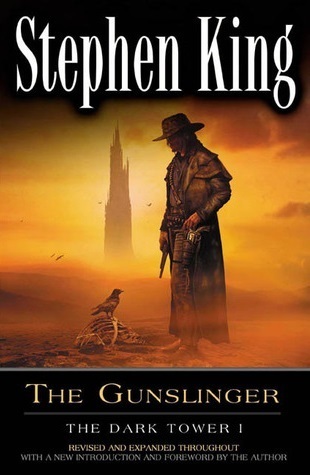
Other stories, such as Stephen King’s The Dark Tower series, feel epic for yet another reason: the sheer length of the volumes themselves. While the first book, The Gunslinger, is of a more respectable length (around 200 pages), the series gets longer as it goes on, reaching nearly 900 pages by the penultimate (or final, depending on your point of view) novel, The Dark Tower—leaving the reader having slogged through over 4,000 pages and a million words before the end.
And of course, there are stories that are universally agreed to be epic, yet bear none of these characteristics; Star Wars, for example, is almost always spoken of as an epic tale of good versus evil, yet neither spans great lengths of time nor is particularly long—each movie is a pretty average two hours in length. While the characters suffer losses, they also achieve greatness. But Star Wars’ epic nature might be down to something else: its impact on modern culture. Perhaps no other story is as widely recognized or loved in the modern world—even if you manage to find someone who hasn’t seen it, you’d be hard-pressed to find someone who hasn’t heard of it, whereas even sci-fi greats like Dune or fantasy keystones like The Lord of the Rings tend to be beloved within their genres, but less known by those who don’t follow those areas of fiction (or fiction in general).
One universal truth of epic stories, generally, is that the protagonist must undertake a great journey. For some stories, the tale is the journey: The Lord of the Rings is essentially the story of Frodo’s journey from the Shire to Mordor and back again (even its predecessor, The Hobbit, literally subtitles itself as There and Back Again). Whilst there are many other events that take place, and other major characters travel less (or not at all), physical travel is a key aspect of most epic stories.
Sometimes, this travel is undertaken with a purpose; Frodo sets out with the specific task of first protecting, and then destroying, the One Ring. Other stories are less clear; in the beginning of The Dark Tower series, Roland is pursuing the Man in Black; what he does after he catches up to him is ambiguous, and it’s only later in the series that the concept of reaching the Dark Tower and saving the universe (which turns out to be Stephen King’s collective fictional universe, which himself as the creator) is born.
In my own fantasy series, The Redemption of Erâth, the main characters set out with no purpose at all—exiled from their homeland, they initially are simply trying to survive. I’m still not certain, with the ongoing development of the series, whether there is going to be a larger journey with a destination in mind, or if the journey is going to be of a more spiritual nature.
Journeys in time equally count: from The Time Machine to The Time Traveller’s Wife, many, many stories that take place over decades or centuries, as mentioned before, leave the reader with a sense of epic journeys—even if the action takes place in a single setting. In The Time Machine, for example, the characters scarcely leave the environs of the time machine itself, despite traveling millions of years into the past and future. In Diana Gabaldon’s Outlander (though perhaps more romance than epic), Claire travels between the 1940s and the 1790s, creating parallel lives in each era.
Another journey that is sometimes overlooked in epic stories is the inner journey: when the character perhaps doesn’t travel much of anywhere in time or place, yet undergoes a dramatic transformation within themselves.
Going back to my own fantasy series (without giving too much away!), this is something I’m considering with my main character, Brandyé; although there is travel across the lands of Erâth and throughout the history of the world, the journey Brandyé takes from an innocent child to a grown man wracked with torment and despair, is perhaps even more important and vital to the story. Paralleling my own emotional growth in life, I have yet to decide if Brandyé will even escape the darkness that haunts him—or if he will succumb, becoming the villain of his own story.
Character transformations can sometimes feel just as epic as great journeys, and sometimes can be the reason a story feels epic in the first place. Although at the end of The Lord of the Rings we feel exhausted after all that has come before, the utter sense of loss in Frodo’s inability to reintegrate into his old life is really the final nail in the coffin: the knowledge that, for him, nothing will ever be the same. So we are sad and devastated to see him leave into the West, yet knowing that it is as final an ending as there could possibly be.
Of course, it could be argued that all stories absolutely rely on character transformation; without growth or change in the protagonist, or at least in the antagonist, there is little to keep our interest throughout. In fact, one could make a list of the worst stories or films based almost solely on this criteria; if no one is better or worse by the end, what was the point of the journey in the first place?
Yet some stories rely on this more heavily, and these are the ones that remain with us longer, make us feel deeper, and truly have a sense of epicness about them. My favorite book of all time, Great Expectations, although in some ways doesn’t necessarily fit this criteria perfectly, always feels epic to me: the spiritual journey of a young boy who is abused and manipulated throughout his life and only at the very end realizes that he can be himself, is to me an exquisite example of character growth and development. Even the secondary characters such as Estella grow and change, eventually learning that there are better ways to live.
Naturally, a journey of any kind—in time, in space or in spirit—requires a traveler to undertake that journey. This is perhaps the final aspect of what defines a story as epic: who the traveler is, how the react to events, and—as mentioned—how they change as a result.
Some stories take a somewhat predictable approach, naturally, of creating characters who are humble in origins, make their way through danger and difficulty, and arise to the top—either in status or happiness, before either ending there or falling once more into the abyss (whether you’re describing comedy or tragedy, I suppose). Sometimes it’s the reverse: a character high in status is brought low, and has to work their way back (rags to riches, etc.).
I personally prefer stories where the protagonist is less predictable, where you’re not entirely certain if they’re going to do the right thing at any given moment. The wayward traveler is a wonderful device for this, because of course despite (usually) being forced onto a journey unexpectedly, they may or may not have any desire to remain on that path. Frodo is a poor example of this: although he didn’t particularly want to go all the way to Mordor, once he set his mind to it, he went through single-mindedly and determinedly all the way (except for a brief stumble at the end).
A better example comes toward the end of the first Dark Tower book, The Gunslinger, when Roland is holding Jake over a pit and deliberately drops him to continue his chase of the Man in Black. This is a difficult decision to come to terms with as a reader, but in this sense Roland is very much against the right decisions—an anti-hero, of sorts
Either way, of course, we need a traveler—or several—for epic journeys, and it must take a great deal of time, or effort, to achieve the final goal. When it comes to epic stories, perhaps the only true measure of its ‘epicness’ is how exhausted we feel at the end of it; did we just sprint a hundred yards, or run a marathon (or two)? And this isn’t to say that the marathons are better; sometimes we just need a walk in the park. But there is a genuine sense of satisfaction in completing a story that spans novels, decades and thousands of miles, and without these epic tomes, the world of fiction would probably be a lot more boring.
What are your favorite epic stories, and what makes them epic to you? Let me know in the comments!
Get even more book news in your inbox, sign up today! Girl Who Reads is an Amazon advertising affiliate; a small commission is earned when purchases are made at Amazon using any Amazon links on this site. Thank you for supporting Girl Who Reads.
| A 3D model of the One Ring (Photo credit: Wikipedia) |
We have just come to pass Bilbo’s and Frodo’s birthdays—September 22 (two weeks ago today, as it happens). It was not long after that Frodo embarked on his quest to destroy the One Ring, beginning what is one of the most famous epic journeys in the history of fiction. It took him a solid thirteen months to make it there and back (so to speak), getting lost, stabbed, poisoned and mutilated along the way.
Amazon affiliate links are used on this site.

Other epics, such as Doctor Zhivago (which I briefly mentioned last month), do indeed span decades in time. So do some sci-fi epics like Dune, whose entire series eventually spans millennia. As I wrap up the drafting stage of the third book in my own epic series, this has given me pause to wonder—what exactly makes a story epic?
The Meaning of Epic

One of the common characteristics of epic fiction is that it involves great tracts of time. Herein fall stories such as those mentioned previously, as well as series such as The Wheel of Time, or James Blish’s Cities in Flight. Sometimes we are introduced to characters who, through immortality, time travel or some other invention of the author, actually live through these extensive spans of time, experiencing the rise of fall of civilizations, and often losing all they love and hold dear as those around them perish in a more natural length of time. Other times, the story will jump from time to time, introducing new characters along the way, and sometimes leaving behind others who would have naturally perished of old age long before.
But time isn’t the only factor in determining a story’s ‘epicness’; for example, Douglas Adams’ The Hitchhiker’s Guide to the Galaxy series spans time from the Stone Age to the end of the universe, but it takes place—from the point of view of the main character, at least—within a comparatively short period of time. In this regard, some might argue that it isn’t really epic at all.
Yet the series, taken altogether, nonetheless leaves the reader with a sense of epicness by the end, simply for the sheer number of traumas and events Arthur Dent survives amongst its pages. From losing his planet to losing his only love, and eventually the entire set of multiverses in which he exists, the main character suffers enormously, which perhaps helps add to the definition of epic: enormous or great suffering, as well. This perhaps ties into the ‘heroic’ aspect of the epic tale, in the sense of a hero being someone who is intended to suffer and yet remain courageous throughout.
Other stories, such as Stephen King’s The Dark Tower series, feel epic for yet another reason: the sheer length of the volumes themselves. While the first book, The Gunslinger, is of a more respectable length (around 200 pages), the series gets longer as it goes on, reaching nearly 900 pages by the penultimate (or final, depending on your point of view) novel, The Dark Tower—leaving the reader having slogged through over 4,000 pages and a million words before the end.
And of course, there are stories that are universally agreed to be epic, yet bear none of these characteristics; Star Wars, for example, is almost always spoken of as an epic tale of good versus evil, yet neither spans great lengths of time nor is particularly long—each movie is a pretty average two hours in length. While the characters suffer losses, they also achieve greatness. But Star Wars’ epic nature might be down to something else: its impact on modern culture. Perhaps no other story is as widely recognized or loved in the modern world—even if you manage to find someone who hasn’t seen it, you’d be hard-pressed to find someone who hasn’t heard of it, whereas even sci-fi greats like Dune or fantasy keystones like The Lord of the Rings tend to be beloved within their genres, but less known by those who don’t follow those areas of fiction (or fiction in general).
Journeys in Space and Time

Sometimes, this travel is undertaken with a purpose; Frodo sets out with the specific task of first protecting, and then destroying, the One Ring. Other stories are less clear; in the beginning of The Dark Tower series, Roland is pursuing the Man in Black; what he does after he catches up to him is ambiguous, and it’s only later in the series that the concept of reaching the Dark Tower and saving the universe (which turns out to be Stephen King’s collective fictional universe, which himself as the creator) is born.
In my own fantasy series, The Redemption of Erâth, the main characters set out with no purpose at all—exiled from their homeland, they initially are simply trying to survive. I’m still not certain, with the ongoing development of the series, whether there is going to be a larger journey with a destination in mind, or if the journey is going to be of a more spiritual nature.
Journeys in time equally count: from The Time Machine to The Time Traveller’s Wife, many, many stories that take place over decades or centuries, as mentioned before, leave the reader with a sense of epic journeys—even if the action takes place in a single setting. In The Time Machine, for example, the characters scarcely leave the environs of the time machine itself, despite traveling millions of years into the past and future. In Diana Gabaldon’s Outlander (though perhaps more romance than epic), Claire travels between the 1940s and the 1790s, creating parallel lives in each era.
The Emotional or Spiritual Journey

Going back to my own fantasy series (without giving too much away!), this is something I’m considering with my main character, Brandyé; although there is travel across the lands of Erâth and throughout the history of the world, the journey Brandyé takes from an innocent child to a grown man wracked with torment and despair, is perhaps even more important and vital to the story. Paralleling my own emotional growth in life, I have yet to decide if Brandyé will even escape the darkness that haunts him—or if he will succumb, becoming the villain of his own story.
Character transformations can sometimes feel just as epic as great journeys, and sometimes can be the reason a story feels epic in the first place. Although at the end of The Lord of the Rings we feel exhausted after all that has come before, the utter sense of loss in Frodo’s inability to reintegrate into his old life is really the final nail in the coffin: the knowledge that, for him, nothing will ever be the same. So we are sad and devastated to see him leave into the West, yet knowing that it is as final an ending as there could possibly be.
Of course, it could be argued that all stories absolutely rely on character transformation; without growth or change in the protagonist, or at least in the antagonist, there is little to keep our interest throughout. In fact, one could make a list of the worst stories or films based almost solely on this criteria; if no one is better or worse by the end, what was the point of the journey in the first place?
Yet some stories rely on this more heavily, and these are the ones that remain with us longer, make us feel deeper, and truly have a sense of epicness about them. My favorite book of all time, Great Expectations, although in some ways doesn’t necessarily fit this criteria perfectly, always feels epic to me: the spiritual journey of a young boy who is abused and manipulated throughout his life and only at the very end realizes that he can be himself, is to me an exquisite example of character growth and development. Even the secondary characters such as Estella grow and change, eventually learning that there are better ways to live.
The Traveler

Some stories take a somewhat predictable approach, naturally, of creating characters who are humble in origins, make their way through danger and difficulty, and arise to the top—either in status or happiness, before either ending there or falling once more into the abyss (whether you’re describing comedy or tragedy, I suppose). Sometimes it’s the reverse: a character high in status is brought low, and has to work their way back (rags to riches, etc.).
I personally prefer stories where the protagonist is less predictable, where you’re not entirely certain if they’re going to do the right thing at any given moment. The wayward traveler is a wonderful device for this, because of course despite (usually) being forced onto a journey unexpectedly, they may or may not have any desire to remain on that path. Frodo is a poor example of this: although he didn’t particularly want to go all the way to Mordor, once he set his mind to it, he went through single-mindedly and determinedly all the way (except for a brief stumble at the end).
A better example comes toward the end of the first Dark Tower book, The Gunslinger, when Roland is holding Jake over a pit and deliberately drops him to continue his chase of the Man in Black. This is a difficult decision to come to terms with as a reader, but in this sense Roland is very much against the right decisions—an anti-hero, of sorts
Either way, of course, we need a traveler—or several—for epic journeys, and it must take a great deal of time, or effort, to achieve the final goal. When it comes to epic stories, perhaps the only true measure of its ‘epicness’ is how exhausted we feel at the end of it; did we just sprint a hundred yards, or run a marathon (or two)? And this isn’t to say that the marathons are better; sometimes we just need a walk in the park. But there is a genuine sense of satisfaction in completing a story that spans novels, decades and thousands of miles, and without these epic tomes, the world of fiction would probably be a lot more boring.
What are your favorite epic stories, and what makes them epic to you? Let me know in the comments!
Raised between the soaring peaks of the Swiss Alps and the dark industrialism of northern England, beauty and darkness have been twin influences on Chris's creativity since his youth. Throughout his life he has expressed this through music, art, and literature, delving deep into the darkest parts of human nature, and finding the elegance therein. These themes are central to his current literary project, The Redemption of Erâth. A dark epic fantasy, it is a tale of the bitter struggle against darkness and despair, and an acknowledgment that there are some things the mind cannot overcome. Written from a depth of personal experience, Chris' words are touching and powerful, the hallmark of someone who has walked alone through the night, and welcomes the final darkness of the soul. However, for now, he lives in New Jersey with his wife and eleven-year-old son. You can also find him at http://satiswrites.com.
Get even more book news in your inbox, sign up today! Girl Who Reads is an Amazon advertising affiliate; a small commission is earned when purchases are made at Amazon using any Amazon links on this site. Thank you for supporting Girl Who Reads.
July 7, 2017
Education vs. Entertainment: The Power of Fiction
by Chris
While most of us are preparing for the summer, making vacation plans and finishing off the leftover burgers and potato salad from this week’s barbecue, there are some of us who find it a little more difficult to enjoy the sun, warm weather and beaches. Not for lack of trying, you understand, but sometimes it’s hard to see the sun for the clouds.
I, like millions around the world, suffer from a mental illness. For me it’s a kind of depressive bipolar, which means I go through extended periods of severe depression, alternating with periods of happy, lightened moods.
I’m happy right now, which is a good thing, but that’s besides the point.
The point is, there are a lot of things going on in people’s lives, in their minds and in their spirits, and often the rest of the world seems to go on, oblivious. I can’t really blame anyone for this—it’s hard to pay attention to what you don’t know is there—but sometimes you can’t help wonder if there was a way to waker people up, get them to notice, and maybe, just maybe, help out.
Now, I speak specifically about mental illness because it’s something I’m familiar with, but the same could be said of poverty, sexuality, or racism. There are a lot of things wrong in the world, and it’s easy—in fact, desirable, most of the time—to turn a blind eye to it. It makes life a lot easier if you pretend problems don’t exist.
And human nature only has so much capacity for kindness; even with the most open of hearts, one person can only pay attention to so many things before they are overwhelmed, and shut down themselves.
But while one can’t reasonably expect people to care about everything equally, just like we can’t donate to every charity in the world, it is possible to ask that they open their eyes for a moment, let in the light (or darkness, as the case may be), and see if something sticks. Because knowledge is power, and education is the bringer of knowledge.
This is where things get a little fuzzy, though. Most adults, sadly, resent education; perhaps they have bad memories of school, or don’t want to feel inferior for not knowing something, but it’s very difficult to get an otherwise rational human being to change their mind or consider something from an outside perspective. But adults love entertainment. They love to be distracted, taken away from the mundane of the everyday, and spirited off to a fantasy world of ghosts and goblins, or even hitwomen and spies.
And there is a place here, in entertainment, to silently and subtly educate. It’s an interesting concept, because most people don’t tend to think of education and entertainment as compatible. Learning isn’t supposed to be fun, we’re taught from an early age; learning is boring, cramming for tests, and subsequently forgetting most of what we learned anyway.
But when something under the guise of entertainment reaches a deeper part of our soul, touches our heart and brings out tears or laughter, there’s a good chance that something will stick.
Alison wrote a few months ago about reading Thirteen Reasons Why with her daughter. I’ve written about it before, myself. It’s a book that has some teaching moments, certainly: educating people about suicide, bullying and the traumas that young people go through is vitally important, especially for parents. Yet it’s been heavily criticized for not delving into the psychology behind suicide, and the mental depression that invariably goes along with it.
Sometimes a book doesn’t have to be about a topic to have a learning moment; in The Perks of Being a Wallflower, which is as much about childhood trauma as adolescence, there a significant homosexual relationship which is mainly accepted by the protagonist, though the book doesn’t strictly center around it. Yet there is a potential for a reader to question their own priorities, and reflect on the abuse they may have witnessed and never acted on themselves.
Ultimately, it becomes a question of why we write fiction at all. Is it for entertainment? Is it for education? Does every story need to have a learning point, or would that be too similar to an agenda?
Perhaps it can be a bit of all of that. While a Michael Crichton or Tom Clancy thriller might not have much to teach us in the ways humanity, it doesn’t necessarily make them any less valid as entertainment. And if Thirteen Reasons Why is meant to teach about social bullying and suicide, it doesn’t prevent it from being a thrilling recreation.
Undoubtedly, some people will walk away from these books without learning a thing. They will read it to distract, and to experience the emotions and feelings that come with powerful writing and difficult subjects, but they may not move on to act on it in any way. Some people might keep a wider eye out for something they had previously been oblivious to: I remember reading Her by Christa Parravani, and to this day I’m—perhaps subtly—more aware of the hidden sexual traumas that women must face every day.
And sometimes a book might just be powerful enough to cause a few people, or even one person, to change their mindset, the way they think, or even the way they behave. They might look at their coworker, their spouse or their children in a new light, and appreciate them just a little more than before. And herein lies the power of fiction: stories have the potential to change the world, one person at a time.
What is something you remember learning from a book, or a film? What’s the most impactful lesson that’s stayed with you, ever since?
Get even more book news in your inbox, sign up today!. Girl Who Reads is an Amazon advertising affiliate; a small commission is earned when purchases are made at Amazon using any Amazon links on this site. Thank you for supporting Girl Who Reads.
While most of us are preparing for the summer, making vacation plans and finishing off the leftover burgers and potato salad from this week’s barbecue, there are some of us who find it a little more difficult to enjoy the sun, warm weather and beaches. Not for lack of trying, you understand, but sometimes it’s hard to see the sun for the clouds.
I, like millions around the world, suffer from a mental illness. For me it’s a kind of depressive bipolar, which means I go through extended periods of severe depression, alternating with periods of happy, lightened moods.
I’m happy right now, which is a good thing, but that’s besides the point.
The point is, there are a lot of things going on in people’s lives, in their minds and in their spirits, and often the rest of the world seems to go on, oblivious. I can’t really blame anyone for this—it’s hard to pay attention to what you don’t know is there—but sometimes you can’t help wonder if there was a way to waker people up, get them to notice, and maybe, just maybe, help out.
Now, I speak specifically about mental illness because it’s something I’m familiar with, but the same could be said of poverty, sexuality, or racism. There are a lot of things wrong in the world, and it’s easy—in fact, desirable, most of the time—to turn a blind eye to it. It makes life a lot easier if you pretend problems don’t exist.
And human nature only has so much capacity for kindness; even with the most open of hearts, one person can only pay attention to so many things before they are overwhelmed, and shut down themselves.
But while one can’t reasonably expect people to care about everything equally, just like we can’t donate to every charity in the world, it is possible to ask that they open their eyes for a moment, let in the light (or darkness, as the case may be), and see if something sticks. Because knowledge is power, and education is the bringer of knowledge.
This is where things get a little fuzzy, though. Most adults, sadly, resent education; perhaps they have bad memories of school, or don’t want to feel inferior for not knowing something, but it’s very difficult to get an otherwise rational human being to change their mind or consider something from an outside perspective. But adults love entertainment. They love to be distracted, taken away from the mundane of the everyday, and spirited off to a fantasy world of ghosts and goblins, or even hitwomen and spies.
And there is a place here, in entertainment, to silently and subtly educate. It’s an interesting concept, because most people don’t tend to think of education and entertainment as compatible. Learning isn’t supposed to be fun, we’re taught from an early age; learning is boring, cramming for tests, and subsequently forgetting most of what we learned anyway.
But when something under the guise of entertainment reaches a deeper part of our soul, touches our heart and brings out tears or laughter, there’s a good chance that something will stick.
Alison wrote a few months ago about reading Thirteen Reasons Why with her daughter. I’ve written about it before, myself. It’s a book that has some teaching moments, certainly: educating people about suicide, bullying and the traumas that young people go through is vitally important, especially for parents. Yet it’s been heavily criticized for not delving into the psychology behind suicide, and the mental depression that invariably goes along with it.
Sometimes a book doesn’t have to be about a topic to have a learning moment; in The Perks of Being a Wallflower, which is as much about childhood trauma as adolescence, there a significant homosexual relationship which is mainly accepted by the protagonist, though the book doesn’t strictly center around it. Yet there is a potential for a reader to question their own priorities, and reflect on the abuse they may have witnessed and never acted on themselves.
Ultimately, it becomes a question of why we write fiction at all. Is it for entertainment? Is it for education? Does every story need to have a learning point, or would that be too similar to an agenda?
Perhaps it can be a bit of all of that. While a Michael Crichton or Tom Clancy thriller might not have much to teach us in the ways humanity, it doesn’t necessarily make them any less valid as entertainment. And if Thirteen Reasons Why is meant to teach about social bullying and suicide, it doesn’t prevent it from being a thrilling recreation.
Undoubtedly, some people will walk away from these books without learning a thing. They will read it to distract, and to experience the emotions and feelings that come with powerful writing and difficult subjects, but they may not move on to act on it in any way. Some people might keep a wider eye out for something they had previously been oblivious to: I remember reading Her by Christa Parravani, and to this day I’m—perhaps subtly—more aware of the hidden sexual traumas that women must face every day.
And sometimes a book might just be powerful enough to cause a few people, or even one person, to change their mindset, the way they think, or even the way they behave. They might look at their coworker, their spouse or their children in a new light, and appreciate them just a little more than before. And herein lies the power of fiction: stories have the potential to change the world, one person at a time.
What is something you remember learning from a book, or a film? What’s the most impactful lesson that’s stayed with you, ever since?
Raised between the soaring peaks of the Swiss Alps and the dark industrialism of northern England, beauty and darkness have been twin influences on Chris's creativity since his youth. Throughout his life he has expressed this through music, art, and literature, delving deep into the darkest parts of human nature, and finding the elegance therein. These themes are central to his current literary project, The Redemption of Erâth. A dark epic fantasy, it is a tale of the bitter struggle against darkness and despair, and an acknowledgment that there are some things the mind cannot overcome. Written from a depth of personal experience, Chris' words are touching and powerful, the hallmark of someone who has walked alone through thenight, and welcomes the final darkness of the soul. However, for now, he lives in New Jersey with his wife and eleven-year-old son. You can also find him at http://satiswrites.com.
Get even more book news in your inbox, sign up today!. Girl Who Reads is an Amazon advertising affiliate; a small commission is earned when purchases are made at Amazon using any Amazon links on this site. Thank you for supporting Girl Who Reads.
June 10, 2017
Constructive Criticism and Feedback: Getting an Unbiased Opinion
by Chris
As I’m writing this, I’m waiting in a Starbucks to meet with someone to discuss my book. Not an agent or publisher, sadly, but rather a friend—one to whom I’ve given a draft copy of my book.
May 5, 2017
Point of View and the Empathetic Writer
by Chris
One of the stories I’m currently in the progress of writing involves a plethora of viewpoints (seriously—there are at least a dozen throughout the novel), all surrounding a couple of main characters. It’s an interesting way to approach the story because we actually don’t get to experience the ‘main’ character’s thoughts or voice until very late in the novel. It’s also a difficult way to approach writing a story because each point of view needs to be fresh, vibrant and, crucially, unique.
Most stories are told from limited points of view; we are introduced to a main character, a protagonist, and rarely see the world from outside their perspective. Some will branch out to a few subsidiary characters, but generally, we get to experience the thoughts, actions, and feelings as told by the main character, or as told by a third-party narrator who has an innate understanding of the main character.
There are, of course, exceptions. One of my favorite multiple-POV books is Dracula, where the narrative is told exclusively through diary entries and newspaper articles of the book’s cast of characters. In fact, the titular antagonist is never heard from, only heard about, and this is one of the things that makes it such a terrifying novel: the villain remains mysterious, and thus dangerous, throughout.
The question for me—particularly in writing my current novel—is how to authentically portray a variety of characters whose thoughts and experiences might not match my own. I am a thirty-plus white male, and many of my characters are teenage girls. Even if I draw on the memories of my own teenage years, there are by definition things these girls go through that I will never have experienced. How does one make such characters three-dimension, vibrant, and believable?
Naturally, part of this dilemma comes from the premise of the story in the first place. If the book is primarily plot-driven—as is most fantasy and sci-fi, and indeed most genre fiction—then the characters’ viewpoints at best serve to advance the plot, and often represent a way of describing events that the primary characters are unable to witness or participate in. When Tolkien split The Two Towers, it was to ensure that the reader kept up with the progress both of Frodo and Sam toward Mordor, and of Aragorn against the armies of Isengard. Both of these are plot points that the story hinges on, and we wouldn’t have known about one or the other had we stuck with just one character.
But what about when the story is not about the plot as much as about the characters themselves? The thoughts, emotions, and motivations of the cast come to the front, and it’s in these types of stories that the points of view must be entirely believable. Every thought, every piece of dialogue, must sound as though it could only have come from that character to the point where the reader would be jolted out of the world you’ve created if the dialogue is misappropriated.
This is where the writer’s ability to empathize with their characters becomes paramount. When Jay Asher wrote Thirteen Reasons Why, he made the choice to write from the point of view of a teenage boy, listening to the point of view of a teenage girl. So how does a grown man empathize with a young girl? How did Asher know how to make Hannah’s tapes believable and authentic?
It’s very difficult to pin down what empathy truly is, and even harder to explain how to have it. Some people might define it as ‘feeling with’ someone; that you feel the same pains and joys that they do. Yet this relies on experience—of having lived through something similar, if not identical. When I write about a young girl with severe depression I can empathize because I’ve been there. I’ve suffered that misery.
But what about when you haven’t been through anything even remotely similar? I can’t physically empathize with a young girl because I never was one. I can’t say that I know how it feels to lose a mother, or a daughter, because (thankfully) I’ve never been there.
At what point does empathy stop being about what you’ve experienced yourself, and how do you handle that? The writer’s imagination comes to the forefront here, and this is perhaps a better measure of that imagination than even the plot or story itself. For a writer to be able to write about something that they haven’t experienced and still come across as genuine to someone who has lived through it, takes a quality of imagination a step beyond the ordinary adventure tale.
Some of these stories are successful; some are not. I recently watched M. Night Shyamalan’s Split, which deals with Dissociative Identity Disorder or DID. And while the story itself is engaging and thrilling, I couldn’t help but feel that it does a disservice to those people who genuinely suffer from DID. I’ve interacted with a couple of people with DID, and I couldn’t help wonder if they would be offended by the summarizing of their disorder into what is, essentially, a madman.
The act of writing a story is kind of like telling a lie: the most effective ones blend a measure of truth into the falsehoods. It shouldn’t be apparent which parts of the story have come from the writer’s own life, and which came from their imagination. A seamless integration of fiction and reality is what drives a compelling story, and encourages the reader to see the author as an authority on their subject matter, whether it be mental illness or fantastical creatures.
And I suppose that true empathy is also a mixture of experience and imagination; the ability to see the world through another’s eyes is a difficult task, and the masters of this skill are often those best able to tell stories … or lies.
Get even more book news in your inbox by signing up for our newsletter: http://eepurl.com/mHTVL. Girl Who Reads is an Amazon advertising affiliate; a small commission is earned when purchases are made at Amazon using any Amazon links on this site. Thank you for supporting Girl Who Reads.
One of the stories I’m currently in the progress of writing involves a plethora of viewpoints (seriously—there are at least a dozen throughout the novel), all surrounding a couple of main characters. It’s an interesting way to approach the story because we actually don’t get to experience the ‘main’ character’s thoughts or voice until very late in the novel. It’s also a difficult way to approach writing a story because each point of view needs to be fresh, vibrant and, crucially, unique.
Most stories are told from limited points of view; we are introduced to a main character, a protagonist, and rarely see the world from outside their perspective. Some will branch out to a few subsidiary characters, but generally, we get to experience the thoughts, actions, and feelings as told by the main character, or as told by a third-party narrator who has an innate understanding of the main character.
There are, of course, exceptions. One of my favorite multiple-POV books is Dracula, where the narrative is told exclusively through diary entries and newspaper articles of the book’s cast of characters. In fact, the titular antagonist is never heard from, only heard about, and this is one of the things that makes it such a terrifying novel: the villain remains mysterious, and thus dangerous, throughout.
The question for me—particularly in writing my current novel—is how to authentically portray a variety of characters whose thoughts and experiences might not match my own. I am a thirty-plus white male, and many of my characters are teenage girls. Even if I draw on the memories of my own teenage years, there are by definition things these girls go through that I will never have experienced. How does one make such characters three-dimension, vibrant, and believable?
Naturally, part of this dilemma comes from the premise of the story in the first place. If the book is primarily plot-driven—as is most fantasy and sci-fi, and indeed most genre fiction—then the characters’ viewpoints at best serve to advance the plot, and often represent a way of describing events that the primary characters are unable to witness or participate in. When Tolkien split The Two Towers, it was to ensure that the reader kept up with the progress both of Frodo and Sam toward Mordor, and of Aragorn against the armies of Isengard. Both of these are plot points that the story hinges on, and we wouldn’t have known about one or the other had we stuck with just one character.
But what about when the story is not about the plot as much as about the characters themselves? The thoughts, emotions, and motivations of the cast come to the front, and it’s in these types of stories that the points of view must be entirely believable. Every thought, every piece of dialogue, must sound as though it could only have come from that character to the point where the reader would be jolted out of the world you’ve created if the dialogue is misappropriated.
This is where the writer’s ability to empathize with their characters becomes paramount. When Jay Asher wrote Thirteen Reasons Why, he made the choice to write from the point of view of a teenage boy, listening to the point of view of a teenage girl. So how does a grown man empathize with a young girl? How did Asher know how to make Hannah’s tapes believable and authentic?
It’s very difficult to pin down what empathy truly is, and even harder to explain how to have it. Some people might define it as ‘feeling with’ someone; that you feel the same pains and joys that they do. Yet this relies on experience—of having lived through something similar, if not identical. When I write about a young girl with severe depression I can empathize because I’ve been there. I’ve suffered that misery.
But what about when you haven’t been through anything even remotely similar? I can’t physically empathize with a young girl because I never was one. I can’t say that I know how it feels to lose a mother, or a daughter, because (thankfully) I’ve never been there.
At what point does empathy stop being about what you’ve experienced yourself, and how do you handle that? The writer’s imagination comes to the forefront here, and this is perhaps a better measure of that imagination than even the plot or story itself. For a writer to be able to write about something that they haven’t experienced and still come across as genuine to someone who has lived through it, takes a quality of imagination a step beyond the ordinary adventure tale.
Some of these stories are successful; some are not. I recently watched M. Night Shyamalan’s Split, which deals with Dissociative Identity Disorder or DID. And while the story itself is engaging and thrilling, I couldn’t help but feel that it does a disservice to those people who genuinely suffer from DID. I’ve interacted with a couple of people with DID, and I couldn’t help wonder if they would be offended by the summarizing of their disorder into what is, essentially, a madman.
The act of writing a story is kind of like telling a lie: the most effective ones blend a measure of truth into the falsehoods. It shouldn’t be apparent which parts of the story have come from the writer’s own life, and which came from their imagination. A seamless integration of fiction and reality is what drives a compelling story, and encourages the reader to see the author as an authority on their subject matter, whether it be mental illness or fantastical creatures.
And I suppose that true empathy is also a mixture of experience and imagination; the ability to see the world through another’s eyes is a difficult task, and the masters of this skill are often those best able to tell stories … or lies.
Raised between the soaring peaks of the Swiss Alps and the dark industrialism of northern England, beauty and darkness have been twin influences on Chris's creativity since his youth. Throughout his life he has expressed this through music, art, and literature, delving deep into the darkest parts of human nature, and finding the elegance therein. These themes are central to his current literary project, The Redemption of Erâth. A dark epic fantasy, it is a tale of the bitter struggle against darkness and despair, and an acknowledgment that there are some things the mind cannot overcome. Written from a depth of personal experience, Chris' words are touching and powerful, the hallmark of someone who has walked alone through the night, and welcomes the final darkness of the soul. However, for now, he lives in New Jersey with his wife and eleven-year-old son. You can also find him at http://satiswrites.com.
Get even more book news in your inbox by signing up for our newsletter: http://eepurl.com/mHTVL. Girl Who Reads is an Amazon advertising affiliate; a small commission is earned when purchases are made at Amazon using any Amazon links on this site. Thank you for supporting Girl Who Reads.
April 7, 2017
Far from Fresh - The Value of Derivative Fiction
by Chris
Probably the greatest fear of any writer is that their work will be seen as unoriginal, boring, or derivative. After all, no one really wants to read Fifty-One Shades of Grey … do they?
It’s incredibly difficult to craft a story that stands out from the—literally—millions of similar stories that have already been written, published, and sold. Sometimes, it feels like you need to get your idea to market as quickly as possible before someone else essentially publishes your story. In science this is called a scoop—publishing a breakthrough before another research group more or less steals any chance of recognition. In fiction writing, it’s just downright depressing.
But in a world of what seems to be endless stories, novellas, and screenplays, is it even possible to write something entirely original? Unless we’re talking about Shakespeare, or perhaps Homer, the proliferation of fictional material in the past centuries means that no matter how novel you think your idea is, someone somewhere has probably already written something very similar. Trying to write a love story where events always get in the way? Been there, done that. An epic fantasy where the hero must navigate through a world fraught with danger, to find a mystical weapon? Yeah, seen that a couple times already. Main character is a fish? Swimming the seven seas in search of a lost relative? Humans are the enemy? Yeah … seen that one too. Twice.
The point is, it starts to beg the question, what is original, and what is originality, after all?
Originality
As children, we often love to re-read or re-watch the same book or movie over and over again. Repetition breeds familiarity, and in a big, wide scary world, the familiar is comforting. However, as adults familiarity more often breeds contempt, and—in our entertainment, at least—we are always seeking for the new, the fresh, the inspirational—something we haven’t experienced before. It’s an interesting human condition, actually, because in our real lives we often fear the unknown—but in our entertainment, we hunger for it.
Originality becomes the gold standard to aim for, the measure by which all else is compared. Of two movies that were recently released, Logan is praised as being unlike its predecessors, and unlike a traditional superhero movie entirely, while Beauty and the Beast is in some places being criticized for not only being derivative of the animated version but nearly a clone of it. (Critics’ receptions of films, of course, don’t always match popular opinion.)
But what is original? Is Logan, the ninth movie to feature Hugh Jackman as Wolverine, really all that original? Is Beauty and the Beast, based off the cartoon that was based off the French fairy-tale, really anything special? If not, then what can be described as original? What qualifies as derivative?
The word ‘original’ defines itself as not being dependent on previous ideas or material, that the ‘origin’ of the work starts and ends with the first creator(s). An original screenplay is typically perceived as one that is not an adaptation of previous material and is something that is lauded in today’s film industry (consider that less than half of this year’s Oscar Best Picture nominees were ‘original’).
In this sense, of course, it’s easy to identify original stories as ones that have no precedent—ones that are the sole creation of one or a set of authors and are not rewrites or adaptations of someone else’s work. (Interesting that in film this is called adaptation; in literature, it’s called plagiarism.) Most books are original, inasmuch as the fear of being labeled a plagiarist keeps most authors from directly copying and stealing each others’ ideas. Yet original books need not be good books, and many good stories are not original in the traditional sense of the word—Logan, for instance, is based entirely off a character and storyline that has already been told.
So the definition of original becomes slightly less clear when we start to take into account the fact that, in today’s storytelling market, ‘original’ is usually used synonymously with ‘good’.
The Role of Inspiration
In truth, other than caveman of the earliest days, there is very little literature that is wholly original. In his book The Seven Basic Plots: Why We Tell Stories, Christopher Booker breaks plot down into seven foundational story ‘types’, into which many—if not all—modern stories fall. These story types, including quests, comedies, tragedies, and rebirths, form a pattern that can be used to describe almost any story at all, and it becomes clear that, on the most essential of levels, all stories are the same. For example, one might not immediately see a connection between The Silence of the Lambs and Dracula, but both contain a sinister villain of unimaginable evil, weakened throughout the majority of the story until the very end, when we witness their true power. This would be the ‘Overcoming the Monster’ plot. Similarly, Romeo and Juliet and (forgive the comparison) Fifty Shades of Grey both share a theme of a heroine destined to misery and despair, ending in what Booker would describe as ‘Tragedy’.
Whilst some would argue that comparing stories in such a manner demeans their inherent value, it’s nonetheless a useful tool in understanding how humans tell stories, how we structure them, and what we want from them. The first stories we tell are usually as small children, reenacting scenes from our favorite movies and TV shows. As we mature, these stories grow and become more inventive, introducing elements from outside the original source material. Yet even at such a young age, we are basing our stories off of someone else’s: we are using existing material as inspiration.
Art rarely exists in a vacuum. Everything we do, everything we create, is touched and inspired by what we’ve experienced before. In the case of, say, La La Land, the film, whilst original in most senses of the word, is not without its clear influences: classic musicals such as Singin’ in the Rain are evidently paid homage to, whilst director Damien Chazelle himself notes films such as Boogie Nights and Pulp Fiction influenced his portrayal of the city of Los Angeles.
The further back in time we go, the less clear the influences become, as history’s gray veil draws itself over our collective memories. It’s harder to say what might have influenced great writers such as Charles Dickens than it is to see the more immediate parallels between modern authors such as Dan Brown and Tom Clancy. But every storyteller has their precedents, and their own literary loves and influences.
Inspiration, then, could be considered the antidote to unoriginality; for every story that treads the same waters, another tale takes inspiration from it.
Derivative Storytelling
Of course, inspiration is different than derivation, and there’s a fine and somewhat blurry line between the two. In my fantasy series The Redemption of Erâth, I pay homage to Tolkien in a number of ways, including through character names. The plot itself is heavily inspired by such epic fantasies as The Lord of the Rings and even Michael Moorcock’s Elric series. In fact, the plot of a farm boy driven from his home and forced into a quest for redemption is so well-worn that it could well be considered derivative, though I’d like to hope that I’ve injected enough of myself into the stories that they don’t feel clone-ish.
And there are endless variations of this theme. The Belgaraid, by David Eddings; The Wheel of Time, by Robert Jordan; Memory, Sorrow and Thorn by Tad Williams; all of these have orphans or farm boys or kitchen servants as their protagonists. In fact, there are so many quest-style fantasy stories in the world that any new generation of fantasy writers can but be derivative—it’s pretty much all been done.
In my other, more contemporary work, a teenage girl struggles with depression, suicide, and self-harm in a loveless, dysfunctional family setting. There are plenty of miserable teen books out there too—Thirteen Reasons Why, by Jay Asher; Cut, by Patricia McCormick; even The Perks of Being a Wallflower, by Stephen Chbosky. Yet this story is one that is based not on other stories, but primarily on my own personal, human experiences. In this, I hope it to be something more than just derivative—even though it’s hardly the only story of its kind.
Yet even derivative fiction can have its merit. Harkening back to our childhood love of repetition, there is a pleasure in reading a story that is at once familiar and fresh. There are stories that take us by surprise, stories that make us laugh and cry—and then there are stories that are fun yet predictable. When’s the last time you read a mystery where the sleuth didn’t solve the case? We know it’s coming, yet we read it anyway, because it’s light entertainment.
In a world of ebooks and online self-publishing, the number of books being released is exponentially rising. With such large numbers of stories to read, there can only be so many that are wholly original—that don’t immediately remind us of that other story we just read.
And sometimes it isn’t the original material that makes it big; Harry Potter and the Cursed Child is as derivative as it gets (even for the same author), and it was the best-selling book of 2016. The highest-grossing blockbusters of recent years have been Marvel’s Avengers films, which are of course based on characters and plots originally published decades ago.
The Value of Stories
In the end, original, inspired or derivative are simply ways of categorizing the inventiveness of authors—like Booker’s seven types of story, they are only useful to a certain extent. If you took the cast of The Lord of the Rings, dropped them off in Westeros and sent Death Eaters after them, you’d certainly be derivative—but probably pretty original too. Call Harry Frodo and send him off to destroy a ring instead of a Horcrux—did you really think we wouldn’t notice? Yet for all the perspiration and inspiration, the homages and thematic thefts, every story is ultimately original to some extent, if only because only that author could put those words together in exactly that way.
Even in the rather special realm of fan fiction, where characters, settings, and events are not just derived but copied wholesale, the author’s intent is nonetheless to tell a story that hasn’t been told before, or to see an existing story from a different point of view. When I set out to create the world of Erâth, I knew it would bear more than just a passing resemblance to other, similar fantasy lands. Yet even Middle-Earth was intended as an alternate medieval Europe, so who’s the copycat now?
So the question becomes, is the value of a story in its originality, or in its telling? As stories were first handed down from generation to generation, each teller added their own embellishments, their own flair, and their own imagination to what had come before. Undoubtedly some people preferred one teller’s version over another. Interestingly, this is something Hollywood long ago realized: given enough time, younger audiences will yearn for a contemporaneous version of an old classic, to the point where apparently they’re even considering redoing The Matrix now. My son far prefers the 2014 version of Godzilla to that from 1954, and in fairness, for all its charm old rubber-suit just doesn’t terrify anymore.
Yet in literature this remains taboo. Perhaps because of the longer extent of copyright, or perhaps because plagiarism is so vehemently frowned upon, but it becomes paramount for authors and novelists to invent freshness, to seek out the holy grail of originality and write something that’s unlike anything that came before it. And while I’m not defending the outright copying of another’s work, I would argue that ‘true’ originality is a pipe dream: every story there ever was and ever will be has already been told a thousand times in a thousand different ways, and the inventiveness of the author is less in the plot and more in the voice. The masters of modern literature didn’t make their mark with stories that had never been told, but by telling them in a way that had never been heard.
What do you think makes a story ‘original’? Does it have to be something you’ve never come across before, or is it the way in which the author tells it that is more important?
Photo from kaboompics.com. Get even more book news in your inbox by signing up for our newsletter: http://eepurl.com/mHTVL. Girl Who Reads is an Amazon advertising affiliate; a small commission is earned when purchases are made at Amazon using any Amazon links on this site. Thank you for supporting Girl Who Reads.
Probably the greatest fear of any writer is that their work will be seen as unoriginal, boring, or derivative. After all, no one really wants to read Fifty-One Shades of Grey … do they?
It’s incredibly difficult to craft a story that stands out from the—literally—millions of similar stories that have already been written, published, and sold. Sometimes, it feels like you need to get your idea to market as quickly as possible before someone else essentially publishes your story. In science this is called a scoop—publishing a breakthrough before another research group more or less steals any chance of recognition. In fiction writing, it’s just downright depressing.
But in a world of what seems to be endless stories, novellas, and screenplays, is it even possible to write something entirely original? Unless we’re talking about Shakespeare, or perhaps Homer, the proliferation of fictional material in the past centuries means that no matter how novel you think your idea is, someone somewhere has probably already written something very similar. Trying to write a love story where events always get in the way? Been there, done that. An epic fantasy where the hero must navigate through a world fraught with danger, to find a mystical weapon? Yeah, seen that a couple times already. Main character is a fish? Swimming the seven seas in search of a lost relative? Humans are the enemy? Yeah … seen that one too. Twice.
The point is, it starts to beg the question, what is original, and what is originality, after all?
Originality
As children, we often love to re-read or re-watch the same book or movie over and over again. Repetition breeds familiarity, and in a big, wide scary world, the familiar is comforting. However, as adults familiarity more often breeds contempt, and—in our entertainment, at least—we are always seeking for the new, the fresh, the inspirational—something we haven’t experienced before. It’s an interesting human condition, actually, because in our real lives we often fear the unknown—but in our entertainment, we hunger for it.
Originality becomes the gold standard to aim for, the measure by which all else is compared. Of two movies that were recently released, Logan is praised as being unlike its predecessors, and unlike a traditional superhero movie entirely, while Beauty and the Beast is in some places being criticized for not only being derivative of the animated version but nearly a clone of it. (Critics’ receptions of films, of course, don’t always match popular opinion.)
But what is original? Is Logan, the ninth movie to feature Hugh Jackman as Wolverine, really all that original? Is Beauty and the Beast, based off the cartoon that was based off the French fairy-tale, really anything special? If not, then what can be described as original? What qualifies as derivative?
The word ‘original’ defines itself as not being dependent on previous ideas or material, that the ‘origin’ of the work starts and ends with the first creator(s). An original screenplay is typically perceived as one that is not an adaptation of previous material and is something that is lauded in today’s film industry (consider that less than half of this year’s Oscar Best Picture nominees were ‘original’).
In this sense, of course, it’s easy to identify original stories as ones that have no precedent—ones that are the sole creation of one or a set of authors and are not rewrites or adaptations of someone else’s work. (Interesting that in film this is called adaptation; in literature, it’s called plagiarism.) Most books are original, inasmuch as the fear of being labeled a plagiarist keeps most authors from directly copying and stealing each others’ ideas. Yet original books need not be good books, and many good stories are not original in the traditional sense of the word—Logan, for instance, is based entirely off a character and storyline that has already been told.
So the definition of original becomes slightly less clear when we start to take into account the fact that, in today’s storytelling market, ‘original’ is usually used synonymously with ‘good’.
The Role of Inspiration
In truth, other than caveman of the earliest days, there is very little literature that is wholly original. In his book The Seven Basic Plots: Why We Tell Stories, Christopher Booker breaks plot down into seven foundational story ‘types’, into which many—if not all—modern stories fall. These story types, including quests, comedies, tragedies, and rebirths, form a pattern that can be used to describe almost any story at all, and it becomes clear that, on the most essential of levels, all stories are the same. For example, one might not immediately see a connection between The Silence of the Lambs and Dracula, but both contain a sinister villain of unimaginable evil, weakened throughout the majority of the story until the very end, when we witness their true power. This would be the ‘Overcoming the Monster’ plot. Similarly, Romeo and Juliet and (forgive the comparison) Fifty Shades of Grey both share a theme of a heroine destined to misery and despair, ending in what Booker would describe as ‘Tragedy’.
Whilst some would argue that comparing stories in such a manner demeans their inherent value, it’s nonetheless a useful tool in understanding how humans tell stories, how we structure them, and what we want from them. The first stories we tell are usually as small children, reenacting scenes from our favorite movies and TV shows. As we mature, these stories grow and become more inventive, introducing elements from outside the original source material. Yet even at such a young age, we are basing our stories off of someone else’s: we are using existing material as inspiration.
Art rarely exists in a vacuum. Everything we do, everything we create, is touched and inspired by what we’ve experienced before. In the case of, say, La La Land, the film, whilst original in most senses of the word, is not without its clear influences: classic musicals such as Singin’ in the Rain are evidently paid homage to, whilst director Damien Chazelle himself notes films such as Boogie Nights and Pulp Fiction influenced his portrayal of the city of Los Angeles.
The further back in time we go, the less clear the influences become, as history’s gray veil draws itself over our collective memories. It’s harder to say what might have influenced great writers such as Charles Dickens than it is to see the more immediate parallels between modern authors such as Dan Brown and Tom Clancy. But every storyteller has their precedents, and their own literary loves and influences.
Inspiration, then, could be considered the antidote to unoriginality; for every story that treads the same waters, another tale takes inspiration from it.
Derivative Storytelling
Of course, inspiration is different than derivation, and there’s a fine and somewhat blurry line between the two. In my fantasy series The Redemption of Erâth, I pay homage to Tolkien in a number of ways, including through character names. The plot itself is heavily inspired by such epic fantasies as The Lord of the Rings and even Michael Moorcock’s Elric series. In fact, the plot of a farm boy driven from his home and forced into a quest for redemption is so well-worn that it could well be considered derivative, though I’d like to hope that I’ve injected enough of myself into the stories that they don’t feel clone-ish.
And there are endless variations of this theme. The Belgaraid, by David Eddings; The Wheel of Time, by Robert Jordan; Memory, Sorrow and Thorn by Tad Williams; all of these have orphans or farm boys or kitchen servants as their protagonists. In fact, there are so many quest-style fantasy stories in the world that any new generation of fantasy writers can but be derivative—it’s pretty much all been done.
In my other, more contemporary work, a teenage girl struggles with depression, suicide, and self-harm in a loveless, dysfunctional family setting. There are plenty of miserable teen books out there too—Thirteen Reasons Why, by Jay Asher; Cut, by Patricia McCormick; even The Perks of Being a Wallflower, by Stephen Chbosky. Yet this story is one that is based not on other stories, but primarily on my own personal, human experiences. In this, I hope it to be something more than just derivative—even though it’s hardly the only story of its kind.
Yet even derivative fiction can have its merit. Harkening back to our childhood love of repetition, there is a pleasure in reading a story that is at once familiar and fresh. There are stories that take us by surprise, stories that make us laugh and cry—and then there are stories that are fun yet predictable. When’s the last time you read a mystery where the sleuth didn’t solve the case? We know it’s coming, yet we read it anyway, because it’s light entertainment.
In a world of ebooks and online self-publishing, the number of books being released is exponentially rising. With such large numbers of stories to read, there can only be so many that are wholly original—that don’t immediately remind us of that other story we just read.
And sometimes it isn’t the original material that makes it big; Harry Potter and the Cursed Child is as derivative as it gets (even for the same author), and it was the best-selling book of 2016. The highest-grossing blockbusters of recent years have been Marvel’s Avengers films, which are of course based on characters and plots originally published decades ago.
The Value of Stories
In the end, original, inspired or derivative are simply ways of categorizing the inventiveness of authors—like Booker’s seven types of story, they are only useful to a certain extent. If you took the cast of The Lord of the Rings, dropped them off in Westeros and sent Death Eaters after them, you’d certainly be derivative—but probably pretty original too. Call Harry Frodo and send him off to destroy a ring instead of a Horcrux—did you really think we wouldn’t notice? Yet for all the perspiration and inspiration, the homages and thematic thefts, every story is ultimately original to some extent, if only because only that author could put those words together in exactly that way.
Even in the rather special realm of fan fiction, where characters, settings, and events are not just derived but copied wholesale, the author’s intent is nonetheless to tell a story that hasn’t been told before, or to see an existing story from a different point of view. When I set out to create the world of Erâth, I knew it would bear more than just a passing resemblance to other, similar fantasy lands. Yet even Middle-Earth was intended as an alternate medieval Europe, so who’s the copycat now?
So the question becomes, is the value of a story in its originality, or in its telling? As stories were first handed down from generation to generation, each teller added their own embellishments, their own flair, and their own imagination to what had come before. Undoubtedly some people preferred one teller’s version over another. Interestingly, this is something Hollywood long ago realized: given enough time, younger audiences will yearn for a contemporaneous version of an old classic, to the point where apparently they’re even considering redoing The Matrix now. My son far prefers the 2014 version of Godzilla to that from 1954, and in fairness, for all its charm old rubber-suit just doesn’t terrify anymore.
Yet in literature this remains taboo. Perhaps because of the longer extent of copyright, or perhaps because plagiarism is so vehemently frowned upon, but it becomes paramount for authors and novelists to invent freshness, to seek out the holy grail of originality and write something that’s unlike anything that came before it. And while I’m not defending the outright copying of another’s work, I would argue that ‘true’ originality is a pipe dream: every story there ever was and ever will be has already been told a thousand times in a thousand different ways, and the inventiveness of the author is less in the plot and more in the voice. The masters of modern literature didn’t make their mark with stories that had never been told, but by telling them in a way that had never been heard.
What do you think makes a story ‘original’? Does it have to be something you’ve never come across before, or is it the way in which the author tells it that is more important?
Raised between the soaring peaks of the Swiss Alps and the dark industrialism of northern England, beauty and darkness have been twin influences on Chris's creativity since his youth. Throughout his life he has expressed this through music, art, and literature, delving deep into the darkest parts of human nature, and finding the elegance therein. These themes are central to his current literary project, The Redemption of Erâth. A dark epic fantasy, it is a tale of the bitter struggle against darkness and despair, and an acknowledgment that there are some things the mind cannot overcome. Written from a depth of personal experience, Chris' words are touching and powerful, the hallmark of someone who has walked alone through the night, and welcomes the final darkness of the soul. However, for now, he lives in New Jersey with his wife and eleven-year-old son. You can also find him at http://satiswrites.com.
Photo from kaboompics.com. Get even more book news in your inbox by signing up for our newsletter: http://eepurl.com/mHTVL. Girl Who Reads is an Amazon advertising affiliate; a small commission is earned when purchases are made at Amazon using any Amazon links on this site. Thank you for supporting Girl Who Reads.
February 3, 2017
Setting Up Your Story
by Chris
Last month, I wrote about the importance of character development and writing about characters that are relatable, in some small way, to the audience. I used ‘people’ loosely; your character could be a sentient fish for all it matters, as long as they have some train of thought or flow to their consciousness. I said that ultimately, it’s people that are important to a story since people are the driving force behind everything we do: it’s what makes a story interesting.
However, people can’t exist in a vacuum, and the place and setting of the story are often equally important. Unless you’re writing literally an inner monologue, your story presumably takes place somewhere, and at some time, and these things will ultimately influence the way your characters think, feel and behave. The things your characters might do in 1860s London are going to be significantly different to what they might do in 1970s New York, and this extends beyond obvious anachronisms—we all know they didn’t have fax machines in the Victorian era, but even the language and behavior towards fellow characters are going to be different.
In many cases, writers might even think of a setting before they think of a main character; such was the case when I started writing The Redemption of Erâth. I actually had the idea of a fictitious fantasy world long before I came up with the concept of a main character mired by darkness and despair, and to this end, my world-building was the primary focus during the early years of writing this series.
It stands to reason, then, that at least as much thought ought to be given to where our characters do what they do as is given to what they do and why they do it.
As a (primarily) fantasy writer, often the first choice I have to make when approaching a new project is whether to set the story in the real world, a fantasy world or somewhere in-between. There are, of course, numerous notable examples of both in the fantasy genre: The Lord of the Rings clearly set the gold standard for ‘high fantasy’ (set entirely in a fictitious world), while the Harry Potter series remains a remarkable example of a story set partway between the real world and an imagined one.
Other genres don’t have this liberty; while fantasy and sci-fi have the advantage (and burden) of creating entirely new worlds, many other stories, including crime fiction, romances, and contemporary fiction have to make do with a world our readers are already familiar with. (Historical fiction sits in an interesting in-between, where the setting is often real, but the action is fictitious—sometimes to the point of altering history.) In this regard, sometimes the setting becomes less important than the characters and their plights; while Stephen King likes to set many of his stories in rural Maine, I don’t know if this setting is necessarily mandatory for his plots—tales such as IT or The Tommyknockers realistically could be set anywhere that such towns could exist.
In this regard, a writer is often faced with a choice: knowing (to an extent) their audience, they can choose to fictionalize somewhere their readers will know well, or set it somewhere that, whilst still real, most people would know very little about. When I first read Bridge to Terabithia as a child, I was easily able to imagine the woods and streams that Jesse and Leslie frequented, for I had grown up in a similar type of environment. The same was true of To Kill a Mockingbird, for although I didn’t grow up in 1930s Alabama, I was able to envision the setting through Harper Lee’s detailed descriptions of the town, and experiences in similar small-town settings.
When I first read Dracula, on the other hand, I was at the mercy of Bram Stoker’s descriptions of the count’s castle and the gothic Carfax Abbey, for I had little knowledge of these kinds of places. To this extent, I was relying on believable fiction—it didn’t matter to me if Transylvania really had such castles or not, as long as I could believe they did, and could envision them in my mind.
These settings are important because they often set the tone and mood of the story as much as the character’s thoughts and actions do. Inasmuch as writing a story is about convincing the reader to feel something, we as humans are often moved by our surroundings as much as we are by what happens to us.
But how do you go about creating a setting without being ham-fisted about it? How do you let your audience know just when and where your story takes place? In film, this is (relatively) easy: the audience is likely to see the setting long before they are introduced to the characters (think long, panning shots of landscapes, overhead views of cities, etc.). Novels sometimes have a harder job, especially if the book blurb doesn’t set the scene itself because we’re often launched into action with little preliminary background.
If you’re writing a screenplay, of course, you can simply say, 1920s Chicago, and the set designers have their work cut out for them. You wouldn’t typically start out a novel with quite so blatant a setting. Creating a convincing setting from the outset requires a mastery of subtlety, a way of introducing the reader to the place and time without outright stating it. An opening line goes a long way toward this; take for example the opening to The Hobbit:
“In a hole in the ground there lived a hobbit.”
What is a hobbit, I wonder? It lives in a hole, apparently, in the ground. This clearly isn’t a regular human, nor does this story deal with regular human topics. Within a few words, I have an inkling of setting. By contrast, here is the opening line(s) to my secondary work-in-progress (not The Redemption of Erâth):
“It is a dark city on such a late summer evening. The sun is blood over the rooftops, and the girl in the park is sitting in the last rays passing between the old brick buildings.”
From this (I hope), we gather that we are in fact dealing with regular human topics, in a regular human city, and in (perhaps) a relatively modern era.
Of course, setting isn’t something that takes place uniquely at the beginning of the story. In many tales, the setting will change over the course of the telling, whether it be by characters traveling, or changing over time. Throughout the rest of The Hobbit, we are treated to farms and horses and swords and bows, and we become firmly rooted in fantasy. As my own novel (above) progresses, we follow the characters into pubs and clubs and become firmly rooted in present-day reality.
That being said, it’s nonetheless important to give a firm grasp of setting near the beginning. One of my favorite stories is actually one told through a video game, Max Payne (released in 2001). It tells the story of a New York City detective whose family is murdered by junkies, at which point he goes undercover to try and discover the source of the mystery drug that took away his loved ones. The gameplay is interspersed with graphic novel cutscenes, and the overall telling of the story is actually quite well done. However, the opening scene of the game takes place in an abandoned subway station, with set design harking back to the 1920s. Because of this opening environment, I immediately associated the setting with similar-era hard-boiled detective stories, Ã la Raymond Chandler. When we left the subway and emerged into modern-day New York City, I remember feeling just a touch disoriented, as though I had jumped ahead in time 80 years.
A very different story I once read, in which setting was done exquisitely, is His Majesty’s Dragon, by Naomi Novik. In her (ongoing) series about the Napoleonic wars, we are thrust into the action as a British warship engages a French frigate, the characters discovering aboard it a ready-to-hatch dragon egg. With brief descriptions of swords, cannons, and sails, we know immediately that this is historical, fiction, and fantasy. The story rapidly veers away from reality as we are introduced to the concept that dragons are used as an aerial force on both sides of the war, and the story develops remarkably entertainingly from there. I (disappointingly) have yet to read the rest of the books in her series, but I remember being enveloped in the clearly-defined setting from the outset.
Some stories, of course, change settings dramatically throughout, and this is much harder to do, as readers expect a consistency of sorts throughout the story. In H.G. Wells’ The Time Machine, we are introduced to a variety of settings that are all remarkably different from each other, primarily because the characters are literally traveling thousands of years in time. This provides an excuse to explore numerous fantastical places in a single short story and works well.
This is something I’m struggling with myself in my current series, The Redemption of Erâth. In the third book, which I’m currently in the process of editing, one of the characters finds themselves far in the past, in a place where magic is every-day reality, and people can travel the breadth of the world in a matter of weeks. This is far-distanced from the world of horses and swords that I have hitherto been describing, and I’m actually finding it difficult to reconcile the two worlds in a believable manner.
Ultimately, of course, I think the setting is secondary to the characters’ journey, but it’s also related, in an inextricable sort of way: the journey would not be what it is, if not for the setting in which the character journeys through.
What are some of your favorite settings for novels, films or games? What makes them so wonderful? And could the story have worked in a different setting? Let me know in the comments!
Get even more book news in your inbox by signing up for our newsletter: http://eepurl.com/mHTVL. Girl Who Reads is an Amazon advertising affiliate; a small commission is earned when purchases are made at Amazon using any Amazon links on this site. Thank you for supporting Girl Who Reads.
Last month, I wrote about the importance of character development and writing about characters that are relatable, in some small way, to the audience. I used ‘people’ loosely; your character could be a sentient fish for all it matters, as long as they have some train of thought or flow to their consciousness. I said that ultimately, it’s people that are important to a story since people are the driving force behind everything we do: it’s what makes a story interesting.
However, people can’t exist in a vacuum, and the place and setting of the story are often equally important. Unless you’re writing literally an inner monologue, your story presumably takes place somewhere, and at some time, and these things will ultimately influence the way your characters think, feel and behave. The things your characters might do in 1860s London are going to be significantly different to what they might do in 1970s New York, and this extends beyond obvious anachronisms—we all know they didn’t have fax machines in the Victorian era, but even the language and behavior towards fellow characters are going to be different.
In many cases, writers might even think of a setting before they think of a main character; such was the case when I started writing The Redemption of Erâth. I actually had the idea of a fictitious fantasy world long before I came up with the concept of a main character mired by darkness and despair, and to this end, my world-building was the primary focus during the early years of writing this series.
It stands to reason, then, that at least as much thought ought to be given to where our characters do what they do as is given to what they do and why they do it.
As a (primarily) fantasy writer, often the first choice I have to make when approaching a new project is whether to set the story in the real world, a fantasy world or somewhere in-between. There are, of course, numerous notable examples of both in the fantasy genre: The Lord of the Rings clearly set the gold standard for ‘high fantasy’ (set entirely in a fictitious world), while the Harry Potter series remains a remarkable example of a story set partway between the real world and an imagined one.
Other genres don’t have this liberty; while fantasy and sci-fi have the advantage (and burden) of creating entirely new worlds, many other stories, including crime fiction, romances, and contemporary fiction have to make do with a world our readers are already familiar with. (Historical fiction sits in an interesting in-between, where the setting is often real, but the action is fictitious—sometimes to the point of altering history.) In this regard, sometimes the setting becomes less important than the characters and their plights; while Stephen King likes to set many of his stories in rural Maine, I don’t know if this setting is necessarily mandatory for his plots—tales such as IT or The Tommyknockers realistically could be set anywhere that such towns could exist.
In this regard, a writer is often faced with a choice: knowing (to an extent) their audience, they can choose to fictionalize somewhere their readers will know well, or set it somewhere that, whilst still real, most people would know very little about. When I first read Bridge to Terabithia as a child, I was easily able to imagine the woods and streams that Jesse and Leslie frequented, for I had grown up in a similar type of environment. The same was true of To Kill a Mockingbird, for although I didn’t grow up in 1930s Alabama, I was able to envision the setting through Harper Lee’s detailed descriptions of the town, and experiences in similar small-town settings.
When I first read Dracula, on the other hand, I was at the mercy of Bram Stoker’s descriptions of the count’s castle and the gothic Carfax Abbey, for I had little knowledge of these kinds of places. To this extent, I was relying on believable fiction—it didn’t matter to me if Transylvania really had such castles or not, as long as I could believe they did, and could envision them in my mind.
These settings are important because they often set the tone and mood of the story as much as the character’s thoughts and actions do. Inasmuch as writing a story is about convincing the reader to feel something, we as humans are often moved by our surroundings as much as we are by what happens to us.
But how do you go about creating a setting without being ham-fisted about it? How do you let your audience know just when and where your story takes place? In film, this is (relatively) easy: the audience is likely to see the setting long before they are introduced to the characters (think long, panning shots of landscapes, overhead views of cities, etc.). Novels sometimes have a harder job, especially if the book blurb doesn’t set the scene itself because we’re often launched into action with little preliminary background.
If you’re writing a screenplay, of course, you can simply say, 1920s Chicago, and the set designers have their work cut out for them. You wouldn’t typically start out a novel with quite so blatant a setting. Creating a convincing setting from the outset requires a mastery of subtlety, a way of introducing the reader to the place and time without outright stating it. An opening line goes a long way toward this; take for example the opening to The Hobbit:
“In a hole in the ground there lived a hobbit.”
What is a hobbit, I wonder? It lives in a hole, apparently, in the ground. This clearly isn’t a regular human, nor does this story deal with regular human topics. Within a few words, I have an inkling of setting. By contrast, here is the opening line(s) to my secondary work-in-progress (not The Redemption of Erâth):
“It is a dark city on such a late summer evening. The sun is blood over the rooftops, and the girl in the park is sitting in the last rays passing between the old brick buildings.”
From this (I hope), we gather that we are in fact dealing with regular human topics, in a regular human city, and in (perhaps) a relatively modern era.
Of course, setting isn’t something that takes place uniquely at the beginning of the story. In many tales, the setting will change over the course of the telling, whether it be by characters traveling, or changing over time. Throughout the rest of The Hobbit, we are treated to farms and horses and swords and bows, and we become firmly rooted in fantasy. As my own novel (above) progresses, we follow the characters into pubs and clubs and become firmly rooted in present-day reality.
That being said, it’s nonetheless important to give a firm grasp of setting near the beginning. One of my favorite stories is actually one told through a video game, Max Payne (released in 2001). It tells the story of a New York City detective whose family is murdered by junkies, at which point he goes undercover to try and discover the source of the mystery drug that took away his loved ones. The gameplay is interspersed with graphic novel cutscenes, and the overall telling of the story is actually quite well done. However, the opening scene of the game takes place in an abandoned subway station, with set design harking back to the 1920s. Because of this opening environment, I immediately associated the setting with similar-era hard-boiled detective stories, Ã la Raymond Chandler. When we left the subway and emerged into modern-day New York City, I remember feeling just a touch disoriented, as though I had jumped ahead in time 80 years.
A very different story I once read, in which setting was done exquisitely, is His Majesty’s Dragon, by Naomi Novik. In her (ongoing) series about the Napoleonic wars, we are thrust into the action as a British warship engages a French frigate, the characters discovering aboard it a ready-to-hatch dragon egg. With brief descriptions of swords, cannons, and sails, we know immediately that this is historical, fiction, and fantasy. The story rapidly veers away from reality as we are introduced to the concept that dragons are used as an aerial force on both sides of the war, and the story develops remarkably entertainingly from there. I (disappointingly) have yet to read the rest of the books in her series, but I remember being enveloped in the clearly-defined setting from the outset.
Some stories, of course, change settings dramatically throughout, and this is much harder to do, as readers expect a consistency of sorts throughout the story. In H.G. Wells’ The Time Machine, we are introduced to a variety of settings that are all remarkably different from each other, primarily because the characters are literally traveling thousands of years in time. This provides an excuse to explore numerous fantastical places in a single short story and works well.
This is something I’m struggling with myself in my current series, The Redemption of Erâth. In the third book, which I’m currently in the process of editing, one of the characters finds themselves far in the past, in a place where magic is every-day reality, and people can travel the breadth of the world in a matter of weeks. This is far-distanced from the world of horses and swords that I have hitherto been describing, and I’m actually finding it difficult to reconcile the two worlds in a believable manner.
Ultimately, of course, I think the setting is secondary to the characters’ journey, but it’s also related, in an inextricable sort of way: the journey would not be what it is, if not for the setting in which the character journeys through.
What are some of your favorite settings for novels, films or games? What makes them so wonderful? And could the story have worked in a different setting? Let me know in the comments!
Raised between the soaring peaks of the Swiss Alps and the dark industrialism of northern England, beauty and darkness have been twin influences on Chris' creativity since his youth. Throughout his life he has expressed this through music, art, and literature, delving deep into the darkest parts of human nature, and finding the elegance therein. These themes are central to his current literary project, The Redemption of Erâth. A dark epic fantasy, it is a tale of the bitter struggle against darkness and despair, and an acknowledgment that there are some things the mind cannot overcome. Written from a depth of personal experience, Chris' words are touching and powerful, the hallmark of someone who has walked alone through the night, and welcomes the final darkness of the soul. However, for now, he lives in New Jersey with his wife and eleven-year-old son. You can also find him at http://satiswrites.com.
Get even more book news in your inbox by signing up for our newsletter: http://eepurl.com/mHTVL. Girl Who Reads is an Amazon advertising affiliate; a small commission is earned when purchases are made at Amazon using any Amazon links on this site. Thank you for supporting Girl Who Reads.
January 6, 2017
Character Development: How to Raise Your Characters Right
by Chris
In my books, I usually write about people. People who do things, go places, think thoughts, and generally get up to no good. There are, of course, settings—the places in which these people exist are important—and sometimes they bear a brief description. However, to linger too long on a scene or image risks boring the reader, no matter how interesting the mouse holes and snowflakes are in your mind.
The balance of this is difficult to achieve; sometimes you don’t want to give a character’s thoughts away, so you describe what they’re doing, or wearing, or you spend some time discussing the importance of trivialities. Or you might fill the space with intense action, blow-by-blow sword fights and the whizzing of bullets past your ears. For many, this can be an easy out, because of course action is mindless and entertaining, and that’s exactly what many people want from their books: an escape from the realities of life.
But do it too much and you lose the dynamic of the story. Action needs to ebb and flow, rise and fall, come and go. There must be moments of reflection to offset the noise, or it all becomes too much and overwhelms the senses. This is true especially of film, where the temptation is to wow the audience with spectacle and no substance.
So how does one do it? How you do create interesting characters that can drive the action and plot, without overwhelming the audience with unnecessary background and/or intense action?
To start with, I think, it’s worth thinking about why the characters in a story are so important. This might seem an odd question—it’s difficult to imagine a story with no people in it. Mountains and buildings don’t generally do anything themselves, unless a person gets involved. You could film a rock for two hours and call it a movie, but it’s unlikely anyone would want to see it.
The implication, then, is that it’s people that are interesting, rather than the things that surround them. We want to know about what people do, what they think, and how they live. All the better if those people are somehow exceptional, though there are certainly great stories about relatively ordinary people. And if it’s people that are interesting, it only makes sense to fill your story with them, so that the people reading your book or watching your movie stay through the end.
If you choose to write about people (and I use ‘people’ in the loosest of terms: they can be aliens or robots, so long as they are still characters in some way), you then need to make sure that the audience can relate to those people. Why? There’s probably more depth to this question than I have the inclination now to explore, but for me it’s a question of imagination. A lot of people have very little of it, to begin with; asking them to imagine what it’s like to be a seven-tentacled sea-demon from Neptune can be a step too far. But if you give them a character they can relate to, it becomes easier for them to imagine how that character thinks, what their motivations are—what they want. Hence why stories about kings and queens are often far less popular than stories about farm boys and stablehands.
And of course, when it comes down to it, that’s all stories are, really: an act of imagination. As the writer, our job is to do the imagining for our audience, for those who struggle. I generally feel that people deserve some respite from the grueling fates of life, and getting lost in a good book or falling in love with a movie is a wonderful way of doing that.
So why are characters so important? Because they are the link to the audience, the connection with the reader and the watcher. Unless your audience is a fish, it doesn’t bear much relevance to describe the wetness of water. But describe how it quenches the thirst of a man lost in the desert, and it becomes suddenly real: everyone has felt thirst, or hunger, at some point in their lives and can understand how agonizing it must be for that poor, poor character—who, thankfully, isn’t them.
And as it turns out, it isn’t necessarily important for the audience to like the character, or even feel pity or empathy with them. You could have a cast of villains and still come out on top, so long as the audience cares about them. The reader needs to feel something for the character—love, hate, revulsion, fear—and a reason to feel that way. Snow White without the evil queen would be nothing, and the queen has very few redeeming qualities—yet we can fear the queen, as we would fear the tyranny of a vile parent. Remove Snow White and you still have a character that we can connect with, even if it’s in a dark and terrible way.
So if characters are the meat of the story, the main thread that ties everything together, it becomes important to write compelling ones. And this is, often, where the great difficulty sets in. Writing about people—real or fictitious—is easy. Writing about them in a way that actually makes them interesting and worth learning more about is insanely difficult. The writer doesn’t want to resort to tropes and clichés if they can avoid it, but there are only so many places to start.
When I started writing The Redemption of Erâth, I had to come up with a whole host of characters to populate the books. At first, I thought this would be no more difficult than coming up with their names, but it soon became apparent that much more was going to be required. And to that end, I ended up thinking of my characters almost as children—to be raised, grown, nurtured and matured until they were ready to take part in the story. I’ve at times been criticized for giving too much background information in the opening chapters of my first book, Consolation, but for every piece of information in the book, ten more were left out. I had to know what my characters went through before they ever showed up in the story so that their motivations in the story were as believable as possible. Why would someone want to kill another person for no reason?
This was a lesson I learned as I went on, and interestingly it has meant that some of the most compelling characters I’ve written about aren’t even the main ones. Although I know more about the central cast, there are wonderful side characters whose mystery and enigma make them, in a way, far more appealing. I’ve had a lot more fun in the end writing about the secondary protagonist than the primary, and the villains are even better.
The great thing about knowing a great deal about the characters and their motivations is that once you are ready to thrust them into the drama of your fictional world, their reactions will seem very real. Suspension of disbelief is a thing, but it can only take you so far: I’ll believe Superman can fly, but why does Lex Luthor want him to fight Batman so much?
The downside, of course, is that it hurts all the more when you have to do something terrible to your own characters. But then again, if it’s painful to the writer, it should be agonizing to the reader. If you can kill a character without blinking an eye, then don’t be surprised when your audience doesn’t shed a tear, either.
Now, there are scores of examples of when the development of characters was done beautifully, and quite a few where it was, for lack of a better term, botched completely. If you’ve read some of what I’ve written here before, you’ll know that Charles Dickens is one of my favorite authors of all time. He’s a master of engaging and compelling character writing, even though his characters are very often entirely unassuming. From thieving orphans to reclusive spinsters, every single one of the people in his stories have a story of their own, and although we often see only glimpses of these tales, enough is alluded to for us to understand exactly why Scrooge hates Christmas so, or why Miss Havisham keeps the shutters closed and the curtains drawn.
Of course, Dickens also wanted us to feel compassion for his characters, and rarely wrote a villain who deserved no redemption. Others, however, have been able to make us feel a terror for an antagonist so real that we keep our own curtains drawn for nights afterward. When I first read Thomas Harris’ The Silence of the Lambs, I was petrified of Hannibal Lecter. Yet at the same time, I was fascinated by him: despite his brutality and predilection for feasting on other people, he somehow became the hero—because the people he killed were, often, even worse.
This bizarre blend of terror and compassion transferred beautifully to the big screen when Anthony Hopkins and Jodie Foster portrayed the disturbing relationship between the FBI rookie and the infamous serial killer. It becomes even more difficult to develop characters successfully in movies since there is so much less to work with: instead of five hundred pages, you have a mere two hours in which to enamor the audience of your characters.
One of the modern marvels (pardon the pun) of character development in cinema has been the adaptations of Marvel’s comic book characters in movies such as Iron Man and Captain America. On paper, these movies shouldn’t have worked at all: their source material isn’t always known for being realistic or relatable to the everyday. But in nearly every Marvel movie that’s been released, including the Thor and Guardians of the Galaxy franchises, we are given not only believable characters but character-driven stories, as well. In what could have easily become mindless action (think Transformers), we instead got severely flawed and antagonistic heroes who are at each other’s throats as often as they are at those of their enemies.
Of course, we don’t have to have crippling flaws to have great characters; the original Star Wars films were centered around heroes and villains that, again, could have been cardboard cutouts. Instead, we’re given characters who have genuine motivations and good hearts, and just enough is said and left unsaid to keep us rooting for even the roguish Han Solo.
I find the Star Wars franchise an interesting one for this very reason, in fact: it runs the gamut from beautifully written characters to clumsy storylines and boring bad guys, depending on the movie we’re talking about. I recently watched Rogue One: A Star Wars Story (naturally), and came away thinking that, whilst is wasn’t bad, it could have been better. The primary flaw, as I saw it, was character development: unlike every previous Star Wars movie since A New Hope, we were introduced to a wholly new cast of characters—and were asked to care about them.
Regardless of the fact that we already knew how the movie was going to end (remember—many Bothans died), this required us to learn about new characters quickly, and feel compassion for them. Yet vitally important scenes from the very beginning left me feeling flat. When Luke’s family is killed by the Empire in A New Hope, we see his grief, his anger, and his determination. When essentially the same thing happens to our new hero, we suddenly skip forward sixteen-odd years with nary an explanation of what happened in the intervening time. Another character turns from a benevolent rescuer to a warlord with, again, little explanation. Yet more seem to have Jedi-like powers without probing into their past, and ultimately their deaths felt far less impactful for the lack of knowledge about these people.
However, Rogue One was rescued by a nonetheless interesting storyline and good acting, and while it certainly isn’t the best Star Wars movie out there, it by far isn’t the worst. Superhero movies, on the other hand, can be phenomenal, as we saw with Marvel’s cinematic universe—or appalling, as have been many of the DC franchise films of late. Another movie I watched recently with little enthusiasm was Suicide Squad, the story of a ragtag bunch of convicted villains sent to defeat an otherworldly foe to redeem themselves. The concept is great, and this could have been a wonderful movie: but the characters were so poorly written that even Will Smith and Margot Robbie couldn’t act their way out of it.
The essential, fatal flaw of Suicide Squad was in giving too many characters too little screen time. The same could be said of the Avengers movies, although I’ll give them a pass since they’re primarily based on much more successful films. But with Suicide Squad, we’re given only a fleeting glimpse into the lives of these antiheroes before the action takes over—and never relents. One character is madly in love with the main villain, yet we never know why; another would do anything for his daughter yet spends his time murdering people for money.
It isn’t that the characters are inherently unlikeable; it isn’t even that most of them have almost no dialogue; it’s simply that we’re never really given a reason to care about what happens to each one of them. Perhaps the best scene in the movie is where Deadshot is asked to kill Harley Quinn, and he doesn’t—it shows a maturing of the character. There was very little else like this.
In the end, the characters we write are vital to the stories we tell, and it’s therefore, all the more important to ensure that the audience can grasp on to something about them. Some tiny shred of mortality that allows us as readers and watchers to think to ourselves, yes—I could imagine myself doing that. I can understand where they’re coming from. Without this, the characters might as well be made of wood—and the stories would be just about as interesting.
What about you? Who are some of your favorite characters in fiction, and why?
Get even more book news in your inbox by signing up for our newsletter: http://eepurl.com/mHTVL. Girl Who Reads is an Amazon advertising affiliate; a small commission is earned when purchases are made at Amazon using any Amazon links on this site. Thank you for supporting Girl Who Reads.
In my books, I usually write about people. People who do things, go places, think thoughts, and generally get up to no good. There are, of course, settings—the places in which these people exist are important—and sometimes they bear a brief description. However, to linger too long on a scene or image risks boring the reader, no matter how interesting the mouse holes and snowflakes are in your mind.
The balance of this is difficult to achieve; sometimes you don’t want to give a character’s thoughts away, so you describe what they’re doing, or wearing, or you spend some time discussing the importance of trivialities. Or you might fill the space with intense action, blow-by-blow sword fights and the whizzing of bullets past your ears. For many, this can be an easy out, because of course action is mindless and entertaining, and that’s exactly what many people want from their books: an escape from the realities of life.
But do it too much and you lose the dynamic of the story. Action needs to ebb and flow, rise and fall, come and go. There must be moments of reflection to offset the noise, or it all becomes too much and overwhelms the senses. This is true especially of film, where the temptation is to wow the audience with spectacle and no substance.
So how does one do it? How you do create interesting characters that can drive the action and plot, without overwhelming the audience with unnecessary background and/or intense action?
To start with, I think, it’s worth thinking about why the characters in a story are so important. This might seem an odd question—it’s difficult to imagine a story with no people in it. Mountains and buildings don’t generally do anything themselves, unless a person gets involved. You could film a rock for two hours and call it a movie, but it’s unlikely anyone would want to see it.
The implication, then, is that it’s people that are interesting, rather than the things that surround them. We want to know about what people do, what they think, and how they live. All the better if those people are somehow exceptional, though there are certainly great stories about relatively ordinary people. And if it’s people that are interesting, it only makes sense to fill your story with them, so that the people reading your book or watching your movie stay through the end.
If you choose to write about people (and I use ‘people’ in the loosest of terms: they can be aliens or robots, so long as they are still characters in some way), you then need to make sure that the audience can relate to those people. Why? There’s probably more depth to this question than I have the inclination now to explore, but for me it’s a question of imagination. A lot of people have very little of it, to begin with; asking them to imagine what it’s like to be a seven-tentacled sea-demon from Neptune can be a step too far. But if you give them a character they can relate to, it becomes easier for them to imagine how that character thinks, what their motivations are—what they want. Hence why stories about kings and queens are often far less popular than stories about farm boys and stablehands.
And of course, when it comes down to it, that’s all stories are, really: an act of imagination. As the writer, our job is to do the imagining for our audience, for those who struggle. I generally feel that people deserve some respite from the grueling fates of life, and getting lost in a good book or falling in love with a movie is a wonderful way of doing that.
So why are characters so important? Because they are the link to the audience, the connection with the reader and the watcher. Unless your audience is a fish, it doesn’t bear much relevance to describe the wetness of water. But describe how it quenches the thirst of a man lost in the desert, and it becomes suddenly real: everyone has felt thirst, or hunger, at some point in their lives and can understand how agonizing it must be for that poor, poor character—who, thankfully, isn’t them.
And as it turns out, it isn’t necessarily important for the audience to like the character, or even feel pity or empathy with them. You could have a cast of villains and still come out on top, so long as the audience cares about them. The reader needs to feel something for the character—love, hate, revulsion, fear—and a reason to feel that way. Snow White without the evil queen would be nothing, and the queen has very few redeeming qualities—yet we can fear the queen, as we would fear the tyranny of a vile parent. Remove Snow White and you still have a character that we can connect with, even if it’s in a dark and terrible way.
So if characters are the meat of the story, the main thread that ties everything together, it becomes important to write compelling ones. And this is, often, where the great difficulty sets in. Writing about people—real or fictitious—is easy. Writing about them in a way that actually makes them interesting and worth learning more about is insanely difficult. The writer doesn’t want to resort to tropes and clichés if they can avoid it, but there are only so many places to start.
When I started writing The Redemption of Erâth, I had to come up with a whole host of characters to populate the books. At first, I thought this would be no more difficult than coming up with their names, but it soon became apparent that much more was going to be required. And to that end, I ended up thinking of my characters almost as children—to be raised, grown, nurtured and matured until they were ready to take part in the story. I’ve at times been criticized for giving too much background information in the opening chapters of my first book, Consolation, but for every piece of information in the book, ten more were left out. I had to know what my characters went through before they ever showed up in the story so that their motivations in the story were as believable as possible. Why would someone want to kill another person for no reason?
This was a lesson I learned as I went on, and interestingly it has meant that some of the most compelling characters I’ve written about aren’t even the main ones. Although I know more about the central cast, there are wonderful side characters whose mystery and enigma make them, in a way, far more appealing. I’ve had a lot more fun in the end writing about the secondary protagonist than the primary, and the villains are even better.
The great thing about knowing a great deal about the characters and their motivations is that once you are ready to thrust them into the drama of your fictional world, their reactions will seem very real. Suspension of disbelief is a thing, but it can only take you so far: I’ll believe Superman can fly, but why does Lex Luthor want him to fight Batman so much?
The downside, of course, is that it hurts all the more when you have to do something terrible to your own characters. But then again, if it’s painful to the writer, it should be agonizing to the reader. If you can kill a character without blinking an eye, then don’t be surprised when your audience doesn’t shed a tear, either.
Now, there are scores of examples of when the development of characters was done beautifully, and quite a few where it was, for lack of a better term, botched completely. If you’ve read some of what I’ve written here before, you’ll know that Charles Dickens is one of my favorite authors of all time. He’s a master of engaging and compelling character writing, even though his characters are very often entirely unassuming. From thieving orphans to reclusive spinsters, every single one of the people in his stories have a story of their own, and although we often see only glimpses of these tales, enough is alluded to for us to understand exactly why Scrooge hates Christmas so, or why Miss Havisham keeps the shutters closed and the curtains drawn.
Of course, Dickens also wanted us to feel compassion for his characters, and rarely wrote a villain who deserved no redemption. Others, however, have been able to make us feel a terror for an antagonist so real that we keep our own curtains drawn for nights afterward. When I first read Thomas Harris’ The Silence of the Lambs, I was petrified of Hannibal Lecter. Yet at the same time, I was fascinated by him: despite his brutality and predilection for feasting on other people, he somehow became the hero—because the people he killed were, often, even worse.
This bizarre blend of terror and compassion transferred beautifully to the big screen when Anthony Hopkins and Jodie Foster portrayed the disturbing relationship between the FBI rookie and the infamous serial killer. It becomes even more difficult to develop characters successfully in movies since there is so much less to work with: instead of five hundred pages, you have a mere two hours in which to enamor the audience of your characters.
One of the modern marvels (pardon the pun) of character development in cinema has been the adaptations of Marvel’s comic book characters in movies such as Iron Man and Captain America. On paper, these movies shouldn’t have worked at all: their source material isn’t always known for being realistic or relatable to the everyday. But in nearly every Marvel movie that’s been released, including the Thor and Guardians of the Galaxy franchises, we are given not only believable characters but character-driven stories, as well. In what could have easily become mindless action (think Transformers), we instead got severely flawed and antagonistic heroes who are at each other’s throats as often as they are at those of their enemies.
Of course, we don’t have to have crippling flaws to have great characters; the original Star Wars films were centered around heroes and villains that, again, could have been cardboard cutouts. Instead, we’re given characters who have genuine motivations and good hearts, and just enough is said and left unsaid to keep us rooting for even the roguish Han Solo.
I find the Star Wars franchise an interesting one for this very reason, in fact: it runs the gamut from beautifully written characters to clumsy storylines and boring bad guys, depending on the movie we’re talking about. I recently watched Rogue One: A Star Wars Story (naturally), and came away thinking that, whilst is wasn’t bad, it could have been better. The primary flaw, as I saw it, was character development: unlike every previous Star Wars movie since A New Hope, we were introduced to a wholly new cast of characters—and were asked to care about them.
Regardless of the fact that we already knew how the movie was going to end (remember—many Bothans died), this required us to learn about new characters quickly, and feel compassion for them. Yet vitally important scenes from the very beginning left me feeling flat. When Luke’s family is killed by the Empire in A New Hope, we see his grief, his anger, and his determination. When essentially the same thing happens to our new hero, we suddenly skip forward sixteen-odd years with nary an explanation of what happened in the intervening time. Another character turns from a benevolent rescuer to a warlord with, again, little explanation. Yet more seem to have Jedi-like powers without probing into their past, and ultimately their deaths felt far less impactful for the lack of knowledge about these people.
However, Rogue One was rescued by a nonetheless interesting storyline and good acting, and while it certainly isn’t the best Star Wars movie out there, it by far isn’t the worst. Superhero movies, on the other hand, can be phenomenal, as we saw with Marvel’s cinematic universe—or appalling, as have been many of the DC franchise films of late. Another movie I watched recently with little enthusiasm was Suicide Squad, the story of a ragtag bunch of convicted villains sent to defeat an otherworldly foe to redeem themselves. The concept is great, and this could have been a wonderful movie: but the characters were so poorly written that even Will Smith and Margot Robbie couldn’t act their way out of it.
The essential, fatal flaw of Suicide Squad was in giving too many characters too little screen time. The same could be said of the Avengers movies, although I’ll give them a pass since they’re primarily based on much more successful films. But with Suicide Squad, we’re given only a fleeting glimpse into the lives of these antiheroes before the action takes over—and never relents. One character is madly in love with the main villain, yet we never know why; another would do anything for his daughter yet spends his time murdering people for money.
It isn’t that the characters are inherently unlikeable; it isn’t even that most of them have almost no dialogue; it’s simply that we’re never really given a reason to care about what happens to each one of them. Perhaps the best scene in the movie is where Deadshot is asked to kill Harley Quinn, and he doesn’t—it shows a maturing of the character. There was very little else like this.
In the end, the characters we write are vital to the stories we tell, and it’s therefore, all the more important to ensure that the audience can grasp on to something about them. Some tiny shred of mortality that allows us as readers and watchers to think to ourselves, yes—I could imagine myself doing that. I can understand where they’re coming from. Without this, the characters might as well be made of wood—and the stories would be just about as interesting.
What about you? Who are some of your favorite characters in fiction, and why?
Chris, features writer. Raised between the soaring peaks of the Swiss Alps and the dark industrialism of northern England, beauty and darkness have been twin influences on Chris' creativity since his youth. Throughout his life he has expressed this through music, art, and literature, delving deep into the darkest parts of human nature, and finding the elegance therein. These themes are central to his current literary project, The Redemption of Erâth. A dark epic fantasy, it is a tale of the bitter struggle against darkness and despair, and an acknowledgment that there are some things the mind cannot overcome. Written from a depth of personal experience, Chris' words are touching and powerful, the hallmark of someone who has walked alone through the night, and welcomes the final darkness of the soul. However, for now, he lives in New Jersey with his wife and eleven-year-old son. You can also find him at http://satiswrites.com.
Get even more book news in your inbox by signing up for our newsletter: http://eepurl.com/mHTVL. Girl Who Reads is an Amazon advertising affiliate; a small commission is earned when purchases are made at Amazon using any Amazon links on this site. Thank you for supporting Girl Who Reads.
Subscribe to:
Posts (Atom)