Are you a pantser or plotter? If you write, whether you’re published or dreaming of the day, the question is one always asked by one writer to another. Readers not familiar with the terms ask me the same question in roundabout ways. “How do you know where to start writing on a story?” “Do you know how your book will end when you begin?” “How can you write so many pages?”
Showing posts with label Writing. Show all posts
October 5, 2020
September 15, 2020
What I Learned While Writing Dragon's Winter by guest Kandi J Wyatt
You’d think writing fantasy I don’t need to do research, but that’s not the case. One of the reasons my tag-line is “where fantasy and reality meet” is because I write realistic fantasy. That can require research.
While writing Dragon’s Winter, I had several different places pop up that required me to look them up to see if they fit within the timeframe or even how they were done.
March 2, 2020
Runes for Writers: Boost Your Creativity and Destroy Writer's Block by Marc Graham ~ a Review
by MK French
Many people know that Norse cultures used runes for writing, and they have recently been co-opted by various far-right and Nazi movements. While this book acknowledges that, it also seeks to reclaim the knowledge for others to use. The first section of the book outlines this purpose as well as the meaning of each rune of the Elder Futhark. This is the ancient alphabet that the Norse cultures used; the alphabet is named for the first letters of the writing system, much like "alphabet" is derived from the first two letters of the Phoenician and Roman writing system.
November 2, 2018
Time, Take Two by @CMNorthauthor
In a stab at shameless self-promotion, I’m going to announce here that I have a new book released this week: written under my pen name, Satis, The Redemption of Erâth: Ancients & Death hits digital shelves on Sunday, and marks the third installment in the ongoing Redemption of Erâth series. It’s a beast, at nearly 600 pages (that’s after a near 25% cut), but I hope that it doesn’t outstay its welcome: a lot happens.
Amazon affiliate links are used on this site.
October 13, 2018
Putting the Science in Fiction by Dan Koboldt ~ a Review
by Donna Huber
If you are writing medical dramas, steampunk, techno-thrillers, or any sort of science fiction, then you will want to pick up a copy of Putting the Science in Fiction.
October 5, 2018
Why Write At All?
by C. M. North
I want to take you on a journey in time for a moment, if I may - all the way back to a young, bright-eyed child, rife with imagination and blissfully ignorant of the limitations imposed by society telling us what is and isn’t possible in life. I mean, of course, me.
September 7, 2018
Shocking Introductions: Crafting the Perfect Start to a Story
by C. M. North
One of the main criticisms levied against my debut novel, 22 Scars, is that it takes a while to get into. It lacks initial momentum, for lack of a better phrase; it starts with a whisper, and although (I like to believe) it builds to a heightened crescendo of emotional turmoil and unexpected revelations, it doesn’t necessarily shout out from the opening lines that this is going to be a story that will reward your emotional investment. Enough people have said it eventually gets there that I want to believe I achieved something at least good, if not great, but it’s certainly taught me a lesson about how to start a book.
June 15, 2018
Write What You Know ~ by guest @RuthKaufman
June 1, 2018
Judging Books (by their Covers)
by C.M. North
I remember the days of record stores. I remember browsing through records and CDs, trying to find new music that would inspire and connect with me emotionally. It’s very difficult to do that in the age of Spotify and Pandora—after all, these apps promise algorithms that will expand our tastes, but if they’re based on what we already listen to, then how can it truly veer too far from the beaten path?
No—the exquisite experience of visiting a record store was that you would flip through the albums with nothing but the artwork, and maybe the lyric insert, to catch and engage you. There was something magical about taking home an album that could have been electronic trance or Norwegian black metal, and you didn’t know until you put it on and cranked up the speakers. I got some absolute stinkers this way—but I also discovered some beautiful gems, music I would never in a million years have considered listening to.
All because of the cover art.
Art in any form requires some type of judgment; whether it be cursory or in-depth, it invites a critique of its merit, worth and value. When discussing visual art (e.g. painting or photography), that judgment can be fairly instantaneous—it only takes a glance to know whether you like a painting or not. There can certainly be more in-depth analyses of this type of artwork, but for most people, their gut tells them what they need to know almost before their brain can process what they’re seeing.
For other forms of art, however, it becomes more difficult. Other art—film, literature, music—requires time and investment. You can’t really know if you like a book until you’ve read a few pages; a film until you’ve watched a few minutes; a song until you’ve heard it. And we typically approach this investment with caution: no one wants to invest their hard-earned and precious time in something that isn’t going to be worth it for them.
So for these lengthier forms, we typically rely on something to give us an insight into what it’s going to be like—a preview of sorts. And while that can be a blurb, discussion or review, it’s more often, ironically, a piece of art: an image of some kind that purports to describe the contents at a glance, something that implies exactly what you’re in for should you choose to invest in this particular piece of work.
For movies, this is often represented by the poster. For music, the album art. And for books, the cover art. This has even spawned internet memes, with similar themes calling for similar artwork (find me a contemporary romance novel that doesn’t have a half-naked man on the cover), and even similar color themes for similar genres (I’m serious: Google action movie posters followed by romance movie posters). But for all the humor and cynicism, there is something to be learned from this: the cover of a book tells you a lot about what its contents are (or at least, it ought to).
Sometimes, publishers will even commission different covers for the same book with the intention of selling it to different audiences; consider the infinite variations of something as classic as Pride and Prejudice (my favorite is the faux 50s cover from Pulp! The Classics—“Lock Up Your Daughters … Darcy’s in Town!”).
When I came to publish my own books, the cover concerned me. I had neither the artistic merit nor the money to commission an illustrated cover for either my fantasy work, The Redemption of Erâth, or my Young Adult book, 22 Scars. I would have liked it, truly, but I had to work with what was available to me. In the end, this turned out to be photography, which is something I can do. And in the end, I found that a single, unaltered photo can speak volumes about the content of the book within. The best part is that I can often make do with my own personal photos, or at worst a stock photo from an online library.
In a way, the thought given to the cover—its simplicity or complexity—can tell you as much about a book as the content of the cover itself. I’m personally a fan of simpler designs, tailored with care; after all, it says something about the author and their publisher (assuming they aren’t one and the same) that they can summarize the entire story in a single image. A complex piece of illustration, with multiple characters and backgrounds, sometimes feels to me overly busy—as though the publisher couldn’t quite decide what the book is about.
What do you think? Do you prefer simple covers, well-illustrated covers … or do you believe that the cover should be independent from the story? Should you be able to judge a book by its cover, or should books go coverless? Let me know in the comments!
Get even more book news in your inbox, sign up today! Girl Who Reads is an Amazon advertising affiliate; a small commission is earned when purchases are made at Amazon using any Amazon links on this site. Thank you for supporting Girl Who Reads.
I remember the days of record stores. I remember browsing through records and CDs, trying to find new music that would inspire and connect with me emotionally. It’s very difficult to do that in the age of Spotify and Pandora—after all, these apps promise algorithms that will expand our tastes, but if they’re based on what we already listen to, then how can it truly veer too far from the beaten path?
No—the exquisite experience of visiting a record store was that you would flip through the albums with nothing but the artwork, and maybe the lyric insert, to catch and engage you. There was something magical about taking home an album that could have been electronic trance or Norwegian black metal, and you didn’t know until you put it on and cranked up the speakers. I got some absolute stinkers this way—but I also discovered some beautiful gems, music I would never in a million years have considered listening to.
All because of the cover art.
Art in any form requires some type of judgment; whether it be cursory or in-depth, it invites a critique of its merit, worth and value. When discussing visual art (e.g. painting or photography), that judgment can be fairly instantaneous—it only takes a glance to know whether you like a painting or not. There can certainly be more in-depth analyses of this type of artwork, but for most people, their gut tells them what they need to know almost before their brain can process what they’re seeing.
For other forms of art, however, it becomes more difficult. Other art—film, literature, music—requires time and investment. You can’t really know if you like a book until you’ve read a few pages; a film until you’ve watched a few minutes; a song until you’ve heard it. And we typically approach this investment with caution: no one wants to invest their hard-earned and precious time in something that isn’t going to be worth it for them.
So for these lengthier forms, we typically rely on something to give us an insight into what it’s going to be like—a preview of sorts. And while that can be a blurb, discussion or review, it’s more often, ironically, a piece of art: an image of some kind that purports to describe the contents at a glance, something that implies exactly what you’re in for should you choose to invest in this particular piece of work.
For movies, this is often represented by the poster. For music, the album art. And for books, the cover art. This has even spawned internet memes, with similar themes calling for similar artwork (find me a contemporary romance novel that doesn’t have a half-naked man on the cover), and even similar color themes for similar genres (I’m serious: Google action movie posters followed by romance movie posters). But for all the humor and cynicism, there is something to be learned from this: the cover of a book tells you a lot about what its contents are (or at least, it ought to).
Sometimes, publishers will even commission different covers for the same book with the intention of selling it to different audiences; consider the infinite variations of something as classic as Pride and Prejudice (my favorite is the faux 50s cover from Pulp! The Classics—“Lock Up Your Daughters … Darcy’s in Town!”).
When I came to publish my own books, the cover concerned me. I had neither the artistic merit nor the money to commission an illustrated cover for either my fantasy work, The Redemption of Erâth, or my Young Adult book, 22 Scars. I would have liked it, truly, but I had to work with what was available to me. In the end, this turned out to be photography, which is something I can do. And in the end, I found that a single, unaltered photo can speak volumes about the content of the book within. The best part is that I can often make do with my own personal photos, or at worst a stock photo from an online library.
In a way, the thought given to the cover—its simplicity or complexity—can tell you as much about a book as the content of the cover itself. I’m personally a fan of simpler designs, tailored with care; after all, it says something about the author and their publisher (assuming they aren’t one and the same) that they can summarize the entire story in a single image. A complex piece of illustration, with multiple characters and backgrounds, sometimes feels to me overly busy—as though the publisher couldn’t quite decide what the book is about.
What do you think? Do you prefer simple covers, well-illustrated covers … or do you believe that the cover should be independent from the story? Should you be able to judge a book by its cover, or should books go coverless? Let me know in the comments!
Get even more book news in your inbox, sign up today! Girl Who Reads is an Amazon advertising affiliate; a small commission is earned when purchases are made at Amazon using any Amazon links on this site. Thank you for supporting Girl Who Reads.
May 4, 2018
Writing with Purpose by @CMNorthauthor
by C. M. North
Something that comes to mind frequently when I look at the reactions to my writing is whether the idea, the core nugget of meaning that spawned the entire length of prose, is received by the reader. Did they get the point? Perhaps more importantly, did I successfully make the point? And, for that matter, did I even know what point I was trying to make?
April 6, 2018
What to Do When Someone Already Wrote Your Book
by CM North
Around this time last year, I wrote about the value of derivative fiction, and how there is little true originality left in the world. This isn’t a bad thing, necessarily; after all, most stories follow similar plot lines (see virtually every one of Marvel’s superhero movies), which can provide a sense of comfort to the audience. It’s exhilarating to see the dangers faced by the hero, but safe to know they’ll survive at the end.
February 28, 2018
SAILING THE STARRY SEA: The Appeal of Space Opera
by Gareth L. Powell
While I have been known to write other types of science fiction, there’s something about space opera that keeps drawing me back.
The Darkside
by Ross Kitson
I've just released the second book in my YA sci-fi series, excuse the shameless plug, and one sci-fi trope that the book features is the darker version of the hero. I'd written it into the story before I'd even really thought about the classic nature of it, and it wasn't until I got talking to a mate at work that I recognised how commonly it's become used in literature/ media of late.
January 5, 2018
The Importance of an Elevator Pitch
by C.M. North
I did a thing the weekend before Christmas. It was scary, exciting and fulfilling all at once. It took about two hours of my life and made me feel more validated as a writer than I’ve perhaps ever felt before.
I did my first ever book signing!
To many established authors, this is probably no big deal. To avid readers, it probably means nothing, either. But to me it meant a lot: I sold fifteen physical copies of my books, which is more than I’ve sold in the past year, and to top it off I made over $100, which is by far the biggest paycheck I’ve received for my writing, ever.
As rewarding as it was to sign books for complete strangers, there’s a part of me, nonetheless, that feels I could have done better. It was a cold, rainy December day and the stragglers were few, though the bookshop (a small, local independent one) was cozy, and I had quite a few moments of staring into the distance, waiting for someone to walk in.
But that isn’t what I think could have been better. Yes, it could have been a warm, sunny December day, but that isn’t what I mean. Instead, I’m referring to the actual interactions I had with customers—with potential readers of my work. The truth is, I think I could have sold even more copies had I been able to better convey the interest and the engagement of the books themselves.
The funny thing is that, by day, I work in a busy retail environment. I’m usually quite excellent at introducing myself, engaging with customers, and discussing relevant solutions to their needs. Selling a book oughtn’t to be that different … except that it’s my own book. It’s one thing to sell a product you have no personal attachment to; that washing machine, or those pair of jeans, or that hammer—you can speak to the features and the benefits all day, and probably sell a good few of them. But how do you talk about something you’ve spent years of blood, sweat, and tears crafting from nothing without sounding … well, arrogant, or proud? ‘This is the best novel since The Fault in Our Stars.’ ‘If you like The Lord of the Rings, you’ll love this.’
‘Please buy my book, I think you’ll really like it.’
It’s a difficult mentality to overcome, even though selling your own book shouldn’t be that different than selling someone else’s. After all, there’s no one in the world who’s a better subject matter expert. No one else knows it as well as you.
So why is it so hard?
I think part of the difficulty is that one’s own work is, in essence, a piece of one’s soul. It’s dangerous, selling your soul—it leaves you vulnerable and exposed. What if they don’t like it? It’s more than just a rejection of your opinion, but of your very self. It becomes a frightening prospect.
It’s also difficult to avoid falling into tropes and stereotypes when someone asks you what your book is about. ‘It’s about a boy’; ‘It’s about a young girl’; these are the things that, well, all books are about, really. After all, how many fantasy books are out there that follow the adventures of children and young adults? How many YA books pit their characters against social stigmas and mental illnesses? (I mean, all of them, it seems.)
And so it becomes important to craft your answer to the question, ‘What’s it about?’ To write it, practice it, and rehearse it. To deliver it so naturally that it sounds like you just made it up—but in reality, you were just waiting to hook a potential reader.
An elevator pitch is essentially a way of getting someone interested in you, your product or your writing, in a remarkably short length of time (the idea being you could sell yourself in the time it takes to ride an elevator). And I didn’t have one. I didn’t know how to sell my books. I committed all of the sins above, and, well … probably to my detriment.
It’s odd, of course, because I’ve been sending out query letters for some time for my recent YA novel, 22 Scars, (Amazon affiliate link) so you’d think I’d have some practice at pitching my book. (That being said, I haven’t received an acceptance yet.) But delivering in writing and in person are two very different things. You also need to have a few different options: do you give the plot synopsis including the twist or just the hook to whet the appetite?
My pitch essentially sounded something like this: ‘22 Scars is about a young girl suffering from depression, self-harming to help cope, and the traumatic experiences that led her to this point.’ Ugh. It’s bland, generic, uninspired, and totally lacking any form of hook to differentiate it from a thousand others just like it. But what if it had sounded more like this? ‘Imagine your best friend never smiles, never laughs, and cuts herself daily just to cope. What if she were your crush? Your own child? What would you do? 22 Scars explores the life of Amy—seventeen and severely depressed—from the points of view of those closest to her. Along the way, it delves into the mentality of chronic depression, and the reasons for it. It can be painful at times, dealing with both physical and sexual abuse, but ultimately—I’d like to think—rewarding and inspiring. I’d recommend it to anyone who’s ever been depressed, or knows anyone who suffers.’
Perhaps not a work of art, but certainly a little more engaging, right? Maybe makes you want to know more? It takes about 45 seconds to say, even at a slow pace. And it (hopefully) doesn’t sound like anything you’ve read before.
In the end, the book signing was fun, cozy and rewarding, and not just because of the sales. It was wonderful to talk to people about books, reading, and what they were getting for themselves and their loved ones. I just wish I had prepared myself better before going in, and felt more comfortable speaking to my own work. After all—no one knows it better.
Get even more book news in your inbox, sign up today!. Girl Who Reads is an Amazon advertising affiliate; a small commission is earned when purchases are made at Amazon using any Amazon links on this site. Thank you for supporting Girl Who Reads.
I did a thing the weekend before Christmas. It was scary, exciting and fulfilling all at once. It took about two hours of my life and made me feel more validated as a writer than I’ve perhaps ever felt before.
I did my first ever book signing!
To many established authors, this is probably no big deal. To avid readers, it probably means nothing, either. But to me it meant a lot: I sold fifteen physical copies of my books, which is more than I’ve sold in the past year, and to top it off I made over $100, which is by far the biggest paycheck I’ve received for my writing, ever.
As rewarding as it was to sign books for complete strangers, there’s a part of me, nonetheless, that feels I could have done better. It was a cold, rainy December day and the stragglers were few, though the bookshop (a small, local independent one) was cozy, and I had quite a few moments of staring into the distance, waiting for someone to walk in.
But that isn’t what I think could have been better. Yes, it could have been a warm, sunny December day, but that isn’t what I mean. Instead, I’m referring to the actual interactions I had with customers—with potential readers of my work. The truth is, I think I could have sold even more copies had I been able to better convey the interest and the engagement of the books themselves.
The funny thing is that, by day, I work in a busy retail environment. I’m usually quite excellent at introducing myself, engaging with customers, and discussing relevant solutions to their needs. Selling a book oughtn’t to be that different … except that it’s my own book. It’s one thing to sell a product you have no personal attachment to; that washing machine, or those pair of jeans, or that hammer—you can speak to the features and the benefits all day, and probably sell a good few of them. But how do you talk about something you’ve spent years of blood, sweat, and tears crafting from nothing without sounding … well, arrogant, or proud? ‘This is the best novel since The Fault in Our Stars.’ ‘If you like The Lord of the Rings, you’ll love this.’
‘Please buy my book, I think you’ll really like it.’
It’s a difficult mentality to overcome, even though selling your own book shouldn’t be that different than selling someone else’s. After all, there’s no one in the world who’s a better subject matter expert. No one else knows it as well as you.
So why is it so hard?
I think part of the difficulty is that one’s own work is, in essence, a piece of one’s soul. It’s dangerous, selling your soul—it leaves you vulnerable and exposed. What if they don’t like it? It’s more than just a rejection of your opinion, but of your very self. It becomes a frightening prospect.
It’s also difficult to avoid falling into tropes and stereotypes when someone asks you what your book is about. ‘It’s about a boy’; ‘It’s about a young girl’; these are the things that, well, all books are about, really. After all, how many fantasy books are out there that follow the adventures of children and young adults? How many YA books pit their characters against social stigmas and mental illnesses? (I mean, all of them, it seems.)
And so it becomes important to craft your answer to the question, ‘What’s it about?’ To write it, practice it, and rehearse it. To deliver it so naturally that it sounds like you just made it up—but in reality, you were just waiting to hook a potential reader.
An elevator pitch is essentially a way of getting someone interested in you, your product or your writing, in a remarkably short length of time (the idea being you could sell yourself in the time it takes to ride an elevator). And I didn’t have one. I didn’t know how to sell my books. I committed all of the sins above, and, well … probably to my detriment.
It’s odd, of course, because I’ve been sending out query letters for some time for my recent YA novel, 22 Scars, (Amazon affiliate link) so you’d think I’d have some practice at pitching my book. (That being said, I haven’t received an acceptance yet.) But delivering in writing and in person are two very different things. You also need to have a few different options: do you give the plot synopsis including the twist or just the hook to whet the appetite?
My pitch essentially sounded something like this: ‘22 Scars is about a young girl suffering from depression, self-harming to help cope, and the traumatic experiences that led her to this point.’ Ugh. It’s bland, generic, uninspired, and totally lacking any form of hook to differentiate it from a thousand others just like it. But what if it had sounded more like this? ‘Imagine your best friend never smiles, never laughs, and cuts herself daily just to cope. What if she were your crush? Your own child? What would you do? 22 Scars explores the life of Amy—seventeen and severely depressed—from the points of view of those closest to her. Along the way, it delves into the mentality of chronic depression, and the reasons for it. It can be painful at times, dealing with both physical and sexual abuse, but ultimately—I’d like to think—rewarding and inspiring. I’d recommend it to anyone who’s ever been depressed, or knows anyone who suffers.’
Perhaps not a work of art, but certainly a little more engaging, right? Maybe makes you want to know more? It takes about 45 seconds to say, even at a slow pace. And it (hopefully) doesn’t sound like anything you’ve read before.
In the end, the book signing was fun, cozy and rewarding, and not just because of the sales. It was wonderful to talk to people about books, reading, and what they were getting for themselves and their loved ones. I just wish I had prepared myself better before going in, and felt more comfortable speaking to my own work. After all—no one knows it better.
C.M. North is a trained musician, coffee addict and author of 22 Scars, a young adult novel about teenage depression and growing up with tragedy and trauma. He lives in northern New Jersey with his wife, son and cat Pia, who insists she take precedence over writing. You can find him at cmnorthauthor.com.
Get even more book news in your inbox, sign up today!. Girl Who Reads is an Amazon advertising affiliate; a small commission is earned when purchases are made at Amazon using any Amazon links on this site. Thank you for supporting Girl Who Reads.
November 3, 2017
Dealing with Complexity in Structure
by Chris
We’re taught structure in language from a very young age. First, we learn the structure of our sentences (subject, verb, object, etc.). Later, inspired by the stories we read or have read to us, we’re taught to start writing our own stories. Here, we learn about beginnings, middles and ends, and the basics of planning out our tales.
October 20, 2017
The Important Role of Minor Characters
by Donna Huber
Minor characters are often overlooked or just given a cursory mention in reviews - "the secondary characters supported the main characters well". However, they often play a crucial role in plot and/or main character development. With the trend towards ensemble casts with multiple protagonists, minor characters are relegated to the shadows even more. Yet, without these characters, the stories wouldn't be half as good.
Amazon affiliate links are used on this site.
I would love to know who some of your favorite minor characters are. Tell me in the comments!
The brilliance of minor characters is sometimes not realized until the book is re-read as the reader is rightfully caught up in the main actions and main characters. While other times we connect so well with a minor character that we hope that they get their own spin-off series.
(For the purpose of this article, I'm lumping supporting and minor characters together.)
"You must know—and let your readers know—which characters are most important to the story (i.e. the major characters), so they’ll know which are worth following and caring about, and which will quickly disappear (i.e. the inconsequential placeholders)"
But truthfully, minor or supporting characters are often passing figures that for any number of reasons catch our eyes. We can come to care for them just as much as we do the main characters. In some instances, we are more drawn to a minor character than the main character. Just take a look at the number of fanfiction stories that have thrust a minor character into a leading role.
Arguably, the Harry Potter has one of the largest ensemble cast of characters and at times it is difficult to distinguish who is a minor and who is a major character. If we go with a strict definition of any character that is not Harry, Ron, or Hermoine is a minor character then we are left with a multitude of favorite characters - the whole Weasley clan, Colin Creavy, Kingsley Shackbolt, just to name a few.
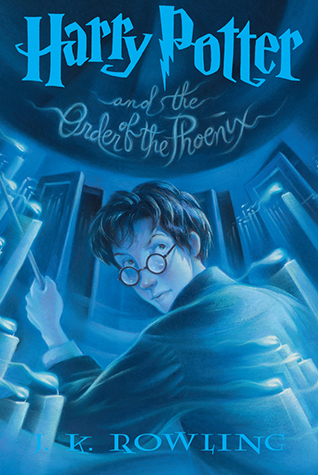
For more two minor/supporting characters truly stand out - Neville and Luna. Luna became a fan favorite from the moment she graced the pages in the 5th Potter book, Harry Potter and the Order of the Phoenix. Her strangeness is almost endearing, but it is really her uncanny ability to state what everyone is thinking but not willing to say out loud. She also provides comic relief at a point where the books become markedly darker. Interestingly, she is the only student that fights at the Ministry of Magic who is not a Gryffindor. She is a Ravenclaw, distinguished by their wisdom and cleverness. For many readers, she could represent their desire for labels not to define them.
I'm not sure in the beginning if Neville received the fan support he deserved. Sure he is singled out by Dumbledore at the end of the 1st book, but did that really mark him as a minor character to watch for? For me, Neville embodies the regular person. For most people, particularly at the age of 11 are awkward and more inept at things. How many of us still had our baby fat at that age? Or were the one that was targeted by the school bully? Probably for most of us, we wondered why such a boy was chosen for Gryffindor, surely he was more suited for Hufflepuff. Yet, by the end of the book 1 we see that it is what is on the inside, that which is often not seen, that really matters.
As we go through the series, Neville is always on the outskirts, tagging along. Like most of us, he wants to be part of the fight against evil but hasn't quite got the confidence to lead the charge. Or perhaps he didn't mind living in the shadows of Harry, Ron, and Hermoine. I know for me I will often let others lead, but like Neville, I'm capable of stepping up when necessary. It is probably why Neville's killing of the snake is so triumphant (and if you have only watched the movies, that scene is so much more satisfying in the book.)
Gallowglass and Sophie - All Souls Trilogy
It was actually during my recent re-read of Deborah Harkness's All Souls Trilogy that I really got to thinking about the importance of minor characters. The 2nd book in the series, Shadow of Night, is peppered with prominent historical characters, but it is two completely fictional minor characters that really jumped off the page for me.
Like Luna, Gallowglass is an instant fan favorite. So many fans have hoped for spin-off series or at least a novella featuring Gallowglass. After reading the series for the first time, hands down Gallowglass was my favorite character. However, it was during my recent re-read that I really took notice of Sophie.
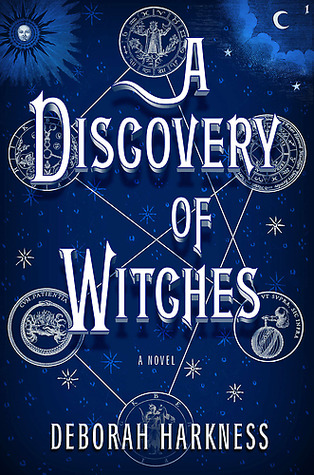
I'm not sure if I have ever noticed her quite as much before. Compared to Gallowglass, Sophie does not have a lengthy part. However, her appearance towards the end of A Discovery of Witches is important in moving the plot forward. And not just because she brings with her the chess piece that allows them to know when and where they should go. It is probably the wit and cleverness in which she delivers her lines that makes her so memorable, some of which you won't recognize until you have completed the trilogy. But for this go around, for me, it was the levity that she inserted into the story that made me take notice. At the point she where she enters the story, everyone knows just how much danger Diana and Matthew are in and the characters are on the verge of letting fear paralyze or divide them. Sophie is like a breath of fresh air. I actually giggled at some of her lines. She doesn't diminish the seriousness of the situation, but instead provides a different perspective and infuses some hope into it.
For me, a great story has to have great characters. I will forgive a lot in the writing and plot if I fall in love with the characters. And it is often the minor and supporting characters that make or break the story - even if their role isn't fully realized during the first read.
What books have you read where the minor characters really enhance the story? Are there any minor characters who you have liked more than the main characters?
Get even more book news in your inbox, sign up today! Girl Who Reads is an Amazon advertising affiliate; a small commission is earned when purchases are made at Amazon using any Amazon links on this site. Thank you for supporting Girl Who Reads.
Minor characters are often overlooked or just given a cursory mention in reviews - "the secondary characters supported the main characters well". However, they often play a crucial role in plot and/or main character development. With the trend towards ensemble casts with multiple protagonists, minor characters are relegated to the shadows even more. Yet, without these characters, the stories wouldn't be half as good.
Amazon affiliate links are used on this site.
I would love to know who some of your favorite minor characters are. Tell me in the comments!
The brilliance of minor characters is sometimes not realized until the book is re-read as the reader is rightfully caught up in the main actions and main characters. While other times we connect so well with a minor character that we hope that they get their own spin-off series.
(For the purpose of this article, I'm lumping supporting and minor characters together.)
Why Minor Characters are Special
In the opening paragraph of his Writer's Digest article What is a Minor Character: Understanding the Minor Characters' Role. Orson Scott Card states,"You must know—and let your readers know—which characters are most important to the story (i.e. the major characters), so they’ll know which are worth following and caring about, and which will quickly disappear (i.e. the inconsequential placeholders)"
But truthfully, minor or supporting characters are often passing figures that for any number of reasons catch our eyes. We can come to care for them just as much as we do the main characters. In some instances, we are more drawn to a minor character than the main character. Just take a look at the number of fanfiction stories that have thrust a minor character into a leading role.
3 reasons we are drawn to minor characters:
- Delivers a particularly witty, poignant, or otherwise memorable line.
- We recognize something of ourselves in them.
- They provide key information on the plot or insight into the main characters, particularly true for foils.
A Closer Look at Specific Minor Characters
Neville Longbottom and Luna Lovegood - Harry Potter
For more two minor/supporting characters truly stand out - Neville and Luna. Luna became a fan favorite from the moment she graced the pages in the 5th Potter book, Harry Potter and the Order of the Phoenix. Her strangeness is almost endearing, but it is really her uncanny ability to state what everyone is thinking but not willing to say out loud. She also provides comic relief at a point where the books become markedly darker. Interestingly, she is the only student that fights at the Ministry of Magic who is not a Gryffindor. She is a Ravenclaw, distinguished by their wisdom and cleverness. For many readers, she could represent their desire for labels not to define them.
I'm not sure in the beginning if Neville received the fan support he deserved. Sure he is singled out by Dumbledore at the end of the 1st book, but did that really mark him as a minor character to watch for? For me, Neville embodies the regular person. For most people, particularly at the age of 11 are awkward and more inept at things. How many of us still had our baby fat at that age? Or were the one that was targeted by the school bully? Probably for most of us, we wondered why such a boy was chosen for Gryffindor, surely he was more suited for Hufflepuff. Yet, by the end of the book 1 we see that it is what is on the inside, that which is often not seen, that really matters.
As we go through the series, Neville is always on the outskirts, tagging along. Like most of us, he wants to be part of the fight against evil but hasn't quite got the confidence to lead the charge. Or perhaps he didn't mind living in the shadows of Harry, Ron, and Hermoine. I know for me I will often let others lead, but like Neville, I'm capable of stepping up when necessary. It is probably why Neville's killing of the snake is so triumphant (and if you have only watched the movies, that scene is so much more satisfying in the book.)
Gallowglass and Sophie - All Souls Trilogy

Like Luna, Gallowglass is an instant fan favorite. So many fans have hoped for spin-off series or at least a novella featuring Gallowglass. After reading the series for the first time, hands down Gallowglass was my favorite character. However, it was during my recent re-read that I really took notice of Sophie.
I'm not sure if I have ever noticed her quite as much before. Compared to Gallowglass, Sophie does not have a lengthy part. However, her appearance towards the end of A Discovery of Witches is important in moving the plot forward. And not just because she brings with her the chess piece that allows them to know when and where they should go. It is probably the wit and cleverness in which she delivers her lines that makes her so memorable, some of which you won't recognize until you have completed the trilogy. But for this go around, for me, it was the levity that she inserted into the story that made me take notice. At the point she where she enters the story, everyone knows just how much danger Diana and Matthew are in and the characters are on the verge of letting fear paralyze or divide them. Sophie is like a breath of fresh air. I actually giggled at some of her lines. She doesn't diminish the seriousness of the situation, but instead provides a different perspective and infuses some hope into it.
All Characters are Important
For me, a great story has to have great characters. I will forgive a lot in the writing and plot if I fall in love with the characters. And it is often the minor and supporting characters that make or break the story - even if their role isn't fully realized during the first read.What books have you read where the minor characters really enhance the story? Are there any minor characters who you have liked more than the main characters?
Donna Huber is an avid reader and natural encourager. She is the founder of Girl Who Reads and the author of how-to marketing book Secrets to a Successful Blog Tour.
Get even more book news in your inbox, sign up today! Girl Who Reads is an Amazon advertising affiliate; a small commission is earned when purchases are made at Amazon using any Amazon links on this site. Thank you for supporting Girl Who Reads.
July 7, 2017
Education vs. Entertainment: The Power of Fiction
by Chris
While most of us are preparing for the summer, making vacation plans and finishing off the leftover burgers and potato salad from this week’s barbecue, there are some of us who find it a little more difficult to enjoy the sun, warm weather and beaches. Not for lack of trying, you understand, but sometimes it’s hard to see the sun for the clouds.
I, like millions around the world, suffer from a mental illness. For me it’s a kind of depressive bipolar, which means I go through extended periods of severe depression, alternating with periods of happy, lightened moods.
I’m happy right now, which is a good thing, but that’s besides the point.
The point is, there are a lot of things going on in people’s lives, in their minds and in their spirits, and often the rest of the world seems to go on, oblivious. I can’t really blame anyone for this—it’s hard to pay attention to what you don’t know is there—but sometimes you can’t help wonder if there was a way to waker people up, get them to notice, and maybe, just maybe, help out.
Now, I speak specifically about mental illness because it’s something I’m familiar with, but the same could be said of poverty, sexuality, or racism. There are a lot of things wrong in the world, and it’s easy—in fact, desirable, most of the time—to turn a blind eye to it. It makes life a lot easier if you pretend problems don’t exist.
And human nature only has so much capacity for kindness; even with the most open of hearts, one person can only pay attention to so many things before they are overwhelmed, and shut down themselves.
But while one can’t reasonably expect people to care about everything equally, just like we can’t donate to every charity in the world, it is possible to ask that they open their eyes for a moment, let in the light (or darkness, as the case may be), and see if something sticks. Because knowledge is power, and education is the bringer of knowledge.
This is where things get a little fuzzy, though. Most adults, sadly, resent education; perhaps they have bad memories of school, or don’t want to feel inferior for not knowing something, but it’s very difficult to get an otherwise rational human being to change their mind or consider something from an outside perspective. But adults love entertainment. They love to be distracted, taken away from the mundane of the everyday, and spirited off to a fantasy world of ghosts and goblins, or even hitwomen and spies.
And there is a place here, in entertainment, to silently and subtly educate. It’s an interesting concept, because most people don’t tend to think of education and entertainment as compatible. Learning isn’t supposed to be fun, we’re taught from an early age; learning is boring, cramming for tests, and subsequently forgetting most of what we learned anyway.
But when something under the guise of entertainment reaches a deeper part of our soul, touches our heart and brings out tears or laughter, there’s a good chance that something will stick.
Alison wrote a few months ago about reading Thirteen Reasons Why with her daughter. I’ve written about it before, myself. It’s a book that has some teaching moments, certainly: educating people about suicide, bullying and the traumas that young people go through is vitally important, especially for parents. Yet it’s been heavily criticized for not delving into the psychology behind suicide, and the mental depression that invariably goes along with it.
Sometimes a book doesn’t have to be about a topic to have a learning moment; in The Perks of Being a Wallflower, which is as much about childhood trauma as adolescence, there a significant homosexual relationship which is mainly accepted by the protagonist, though the book doesn’t strictly center around it. Yet there is a potential for a reader to question their own priorities, and reflect on the abuse they may have witnessed and never acted on themselves.
Ultimately, it becomes a question of why we write fiction at all. Is it for entertainment? Is it for education? Does every story need to have a learning point, or would that be too similar to an agenda?
Perhaps it can be a bit of all of that. While a Michael Crichton or Tom Clancy thriller might not have much to teach us in the ways humanity, it doesn’t necessarily make them any less valid as entertainment. And if Thirteen Reasons Why is meant to teach about social bullying and suicide, it doesn’t prevent it from being a thrilling recreation.
Undoubtedly, some people will walk away from these books without learning a thing. They will read it to distract, and to experience the emotions and feelings that come with powerful writing and difficult subjects, but they may not move on to act on it in any way. Some people might keep a wider eye out for something they had previously been oblivious to: I remember reading Her by Christa Parravani, and to this day I’m—perhaps subtly—more aware of the hidden sexual traumas that women must face every day.
And sometimes a book might just be powerful enough to cause a few people, or even one person, to change their mindset, the way they think, or even the way they behave. They might look at their coworker, their spouse or their children in a new light, and appreciate them just a little more than before. And herein lies the power of fiction: stories have the potential to change the world, one person at a time.
What is something you remember learning from a book, or a film? What’s the most impactful lesson that’s stayed with you, ever since?
Get even more book news in your inbox, sign up today!. Girl Who Reads is an Amazon advertising affiliate; a small commission is earned when purchases are made at Amazon using any Amazon links on this site. Thank you for supporting Girl Who Reads.
While most of us are preparing for the summer, making vacation plans and finishing off the leftover burgers and potato salad from this week’s barbecue, there are some of us who find it a little more difficult to enjoy the sun, warm weather and beaches. Not for lack of trying, you understand, but sometimes it’s hard to see the sun for the clouds.
I, like millions around the world, suffer from a mental illness. For me it’s a kind of depressive bipolar, which means I go through extended periods of severe depression, alternating with periods of happy, lightened moods.
I’m happy right now, which is a good thing, but that’s besides the point.
The point is, there are a lot of things going on in people’s lives, in their minds and in their spirits, and often the rest of the world seems to go on, oblivious. I can’t really blame anyone for this—it’s hard to pay attention to what you don’t know is there—but sometimes you can’t help wonder if there was a way to waker people up, get them to notice, and maybe, just maybe, help out.
Now, I speak specifically about mental illness because it’s something I’m familiar with, but the same could be said of poverty, sexuality, or racism. There are a lot of things wrong in the world, and it’s easy—in fact, desirable, most of the time—to turn a blind eye to it. It makes life a lot easier if you pretend problems don’t exist.
And human nature only has so much capacity for kindness; even with the most open of hearts, one person can only pay attention to so many things before they are overwhelmed, and shut down themselves.
But while one can’t reasonably expect people to care about everything equally, just like we can’t donate to every charity in the world, it is possible to ask that they open their eyes for a moment, let in the light (or darkness, as the case may be), and see if something sticks. Because knowledge is power, and education is the bringer of knowledge.
This is where things get a little fuzzy, though. Most adults, sadly, resent education; perhaps they have bad memories of school, or don’t want to feel inferior for not knowing something, but it’s very difficult to get an otherwise rational human being to change their mind or consider something from an outside perspective. But adults love entertainment. They love to be distracted, taken away from the mundane of the everyday, and spirited off to a fantasy world of ghosts and goblins, or even hitwomen and spies.
And there is a place here, in entertainment, to silently and subtly educate. It’s an interesting concept, because most people don’t tend to think of education and entertainment as compatible. Learning isn’t supposed to be fun, we’re taught from an early age; learning is boring, cramming for tests, and subsequently forgetting most of what we learned anyway.
But when something under the guise of entertainment reaches a deeper part of our soul, touches our heart and brings out tears or laughter, there’s a good chance that something will stick.
Alison wrote a few months ago about reading Thirteen Reasons Why with her daughter. I’ve written about it before, myself. It’s a book that has some teaching moments, certainly: educating people about suicide, bullying and the traumas that young people go through is vitally important, especially for parents. Yet it’s been heavily criticized for not delving into the psychology behind suicide, and the mental depression that invariably goes along with it.
Sometimes a book doesn’t have to be about a topic to have a learning moment; in The Perks of Being a Wallflower, which is as much about childhood trauma as adolescence, there a significant homosexual relationship which is mainly accepted by the protagonist, though the book doesn’t strictly center around it. Yet there is a potential for a reader to question their own priorities, and reflect on the abuse they may have witnessed and never acted on themselves.
Ultimately, it becomes a question of why we write fiction at all. Is it for entertainment? Is it for education? Does every story need to have a learning point, or would that be too similar to an agenda?
Perhaps it can be a bit of all of that. While a Michael Crichton or Tom Clancy thriller might not have much to teach us in the ways humanity, it doesn’t necessarily make them any less valid as entertainment. And if Thirteen Reasons Why is meant to teach about social bullying and suicide, it doesn’t prevent it from being a thrilling recreation.
Undoubtedly, some people will walk away from these books without learning a thing. They will read it to distract, and to experience the emotions and feelings that come with powerful writing and difficult subjects, but they may not move on to act on it in any way. Some people might keep a wider eye out for something they had previously been oblivious to: I remember reading Her by Christa Parravani, and to this day I’m—perhaps subtly—more aware of the hidden sexual traumas that women must face every day.
And sometimes a book might just be powerful enough to cause a few people, or even one person, to change their mindset, the way they think, or even the way they behave. They might look at their coworker, their spouse or their children in a new light, and appreciate them just a little more than before. And herein lies the power of fiction: stories have the potential to change the world, one person at a time.
What is something you remember learning from a book, or a film? What’s the most impactful lesson that’s stayed with you, ever since?
Raised between the soaring peaks of the Swiss Alps and the dark industrialism of northern England, beauty and darkness have been twin influences on Chris's creativity since his youth. Throughout his life he has expressed this through music, art, and literature, delving deep into the darkest parts of human nature, and finding the elegance therein. These themes are central to his current literary project, The Redemption of Erâth. A dark epic fantasy, it is a tale of the bitter struggle against darkness and despair, and an acknowledgment that there are some things the mind cannot overcome. Written from a depth of personal experience, Chris' words are touching and powerful, the hallmark of someone who has walked alone through thenight, and welcomes the final darkness of the soul. However, for now, he lives in New Jersey with his wife and eleven-year-old son. You can also find him at http://satiswrites.com.
Get even more book news in your inbox, sign up today!. Girl Who Reads is an Amazon advertising affiliate; a small commission is earned when purchases are made at Amazon using any Amazon links on this site. Thank you for supporting Girl Who Reads.
July 2, 2017
Putting the Readers Back in Charge of Publishing
by Sarah White
Imagine a YA publishing process without gatekeepers. One where editors and agents read the manuscripts that readers love, not vice versa. One where anyone with a knack for writing, a passion to succeed, and a little flair for self-promotion, has a fair shot at being published.
Aamzon affiliate links are used in this post.
All too frequently, this isn’t the case. Books often get rejected for reasons beyond authors’ control. One editor turned down an ultimately successful book by saying, “The girl doesn't, it seems to me, have a special perception or feeling which would lift that book above the 'curiosity' level.” The book in question? The Diary of Anne Frank. Furthermore, according to the Cooperative Children’s Book Center, only about 10% of all YA books accepted for publication feature “multi-cultural content.” Clearly, there are some blind spots that need addressing in the publishing industry.
It’s with this vision in mind that Publishizer is launching its YA book proposal contest called Plot Without a Cause. Publishizer is a startup seeking to fill a hole in the publishing industry through crowdfunding. It works like this:
Previous Publishizer contest participants have gotten interest and landed deals with a variety of traditional publishing companies, including Harvard Square Books, She Writes Press, and Weiser. Publishizer takes a small commission on pre-orders when you choose a publisher at the end.
Every year, thousands of books are rejected by the publishing world for reasons that have nothing to do with the quality of the book—they’re too mainstream or not mainstream enough, too similar to books already being published or too different from books already being published. Or the literary agent just doesn’t stand to make much money on the deal so they pass on a perfectly good book! Imagine how many brilliant YA manuscripts go unpublished every year thanks to frustrating rejections. Imagine how many hugely talented authors quietly give up on their dreams, just because the gate to a traditional publishing path isn’t open to them.
With their new YA book proposal contest, Plot Without a Cause, Publishizer is seeking to level the playing field. Publishing decisions shouldn’t be based solely on a literary agent’s judgment or how many friends you have in the industry. They should be based on the quality of writing and how many readers the book attracts.
Great books get overlooked all the time, and this is an opportunity to show acquiring editors that yours is worth paying attention to. Not to mention the readership and funds you could gain in the process. Crowdfunding (or crowd-publishing, in this case) is growing in popularity and brings a personal touch back to book sales—for readers and publishers. Are you in?
Get even more book news in your inbox, sign up today!. Girl Who Reads is an Amazon advertising affiliate; a small commission is earned when purchases are made at Amazon using any Amazon links on this site. Thank you for supporting Girl Who Reads.

Imagine a YA publishing process without gatekeepers. One where editors and agents read the manuscripts that readers love, not vice versa. One where anyone with a knack for writing, a passion to succeed, and a little flair for self-promotion, has a fair shot at being published.
Aamzon affiliate links are used in this post.
All too frequently, this isn’t the case. Books often get rejected for reasons beyond authors’ control. One editor turned down an ultimately successful book by saying, “The girl doesn't, it seems to me, have a special perception or feeling which would lift that book above the 'curiosity' level.” The book in question? The Diary of Anne Frank. Furthermore, according to the Cooperative Children’s Book Center, only about 10% of all YA books accepted for publication feature “multi-cultural content.” Clearly, there are some blind spots that need addressing in the publishing industry.
It’s with this vision in mind that Publishizer is launching its YA book proposal contest called Plot Without a Cause. Publishizer is a startup seeking to fill a hole in the publishing industry through crowdfunding. It works like this:
You write the book proposal.
You know the book proposal I’m talking about. The one you’ve been daydreaming about for years. The one that just popped into your head last week and you haven’t stopped thinking about since. The one for the manuscript that’s been dearly loved by you but maybe not so much yet by the publishing industry. That one. Then you register (for free!) on Publishizer’s website and post your proposal in the Plot Without a Cause section (again—for free!).Now, this is when you’ll have to start hustling.
Crowdfunding runs on pre-orders, so you had better start promoting that proposal. Reach out over social media, post on your blog, email your old roommates—whatever it takes to start building buzz. If you get the most preorders by the time the contest ends, you’ll win $1000 dollars. And if you don’t have the highest number of preorders, don’t worry—you’ll still be queried to major publishers who fit your proposal.Previous Publishizer contest participants have gotten interest and landed deals with a variety of traditional publishing companies, including Harvard Square Books, She Writes Press, and Weiser. Publishizer takes a small commission on pre-orders when you choose a publisher at the end.
Every year, thousands of books are rejected by the publishing world for reasons that have nothing to do with the quality of the book—they’re too mainstream or not mainstream enough, too similar to books already being published or too different from books already being published. Or the literary agent just doesn’t stand to make much money on the deal so they pass on a perfectly good book! Imagine how many brilliant YA manuscripts go unpublished every year thanks to frustrating rejections. Imagine how many hugely talented authors quietly give up on their dreams, just because the gate to a traditional publishing path isn’t open to them.
With their new YA book proposal contest, Plot Without a Cause, Publishizer is seeking to level the playing field. Publishing decisions shouldn’t be based solely on a literary agent’s judgment or how many friends you have in the industry. They should be based on the quality of writing and how many readers the book attracts.
Great books get overlooked all the time, and this is an opportunity to show acquiring editors that yours is worth paying attention to. Not to mention the readership and funds you could gain in the process. Crowdfunding (or crowd-publishing, in this case) is growing in popularity and brings a personal touch back to book sales—for readers and publishers. Are you in?
Get even more book news in your inbox, sign up today!. Girl Who Reads is an Amazon advertising affiliate; a small commission is earned when purchases are made at Amazon using any Amazon links on this site. Thank you for supporting Girl Who Reads.
June 10, 2017
Constructive Criticism and Feedback: Getting an Unbiased Opinion
by Chris
As I’m writing this, I’m waiting in a Starbucks to meet with someone to discuss my book. Not an agent or publisher, sadly, but rather a friend—one to whom I’ve given a draft copy of my book.
May 5, 2017
Point of View and the Empathetic Writer
by Chris
One of the stories I’m currently in the progress of writing involves a plethora of viewpoints (seriously—there are at least a dozen throughout the novel), all surrounding a couple of main characters. It’s an interesting way to approach the story because we actually don’t get to experience the ‘main’ character’s thoughts or voice until very late in the novel. It’s also a difficult way to approach writing a story because each point of view needs to be fresh, vibrant and, crucially, unique.
Most stories are told from limited points of view; we are introduced to a main character, a protagonist, and rarely see the world from outside their perspective. Some will branch out to a few subsidiary characters, but generally, we get to experience the thoughts, actions, and feelings as told by the main character, or as told by a third-party narrator who has an innate understanding of the main character.
There are, of course, exceptions. One of my favorite multiple-POV books is Dracula, where the narrative is told exclusively through diary entries and newspaper articles of the book’s cast of characters. In fact, the titular antagonist is never heard from, only heard about, and this is one of the things that makes it such a terrifying novel: the villain remains mysterious, and thus dangerous, throughout.
The question for me—particularly in writing my current novel—is how to authentically portray a variety of characters whose thoughts and experiences might not match my own. I am a thirty-plus white male, and many of my characters are teenage girls. Even if I draw on the memories of my own teenage years, there are by definition things these girls go through that I will never have experienced. How does one make such characters three-dimension, vibrant, and believable?
Naturally, part of this dilemma comes from the premise of the story in the first place. If the book is primarily plot-driven—as is most fantasy and sci-fi, and indeed most genre fiction—then the characters’ viewpoints at best serve to advance the plot, and often represent a way of describing events that the primary characters are unable to witness or participate in. When Tolkien split The Two Towers, it was to ensure that the reader kept up with the progress both of Frodo and Sam toward Mordor, and of Aragorn against the armies of Isengard. Both of these are plot points that the story hinges on, and we wouldn’t have known about one or the other had we stuck with just one character.
But what about when the story is not about the plot as much as about the characters themselves? The thoughts, emotions, and motivations of the cast come to the front, and it’s in these types of stories that the points of view must be entirely believable. Every thought, every piece of dialogue, must sound as though it could only have come from that character to the point where the reader would be jolted out of the world you’ve created if the dialogue is misappropriated.
This is where the writer’s ability to empathize with their characters becomes paramount. When Jay Asher wrote Thirteen Reasons Why, he made the choice to write from the point of view of a teenage boy, listening to the point of view of a teenage girl. So how does a grown man empathize with a young girl? How did Asher know how to make Hannah’s tapes believable and authentic?
It’s very difficult to pin down what empathy truly is, and even harder to explain how to have it. Some people might define it as ‘feeling with’ someone; that you feel the same pains and joys that they do. Yet this relies on experience—of having lived through something similar, if not identical. When I write about a young girl with severe depression I can empathize because I’ve been there. I’ve suffered that misery.
But what about when you haven’t been through anything even remotely similar? I can’t physically empathize with a young girl because I never was one. I can’t say that I know how it feels to lose a mother, or a daughter, because (thankfully) I’ve never been there.
At what point does empathy stop being about what you’ve experienced yourself, and how do you handle that? The writer’s imagination comes to the forefront here, and this is perhaps a better measure of that imagination than even the plot or story itself. For a writer to be able to write about something that they haven’t experienced and still come across as genuine to someone who has lived through it, takes a quality of imagination a step beyond the ordinary adventure tale.
Some of these stories are successful; some are not. I recently watched M. Night Shyamalan’s Split, which deals with Dissociative Identity Disorder or DID. And while the story itself is engaging and thrilling, I couldn’t help but feel that it does a disservice to those people who genuinely suffer from DID. I’ve interacted with a couple of people with DID, and I couldn’t help wonder if they would be offended by the summarizing of their disorder into what is, essentially, a madman.
The act of writing a story is kind of like telling a lie: the most effective ones blend a measure of truth into the falsehoods. It shouldn’t be apparent which parts of the story have come from the writer’s own life, and which came from their imagination. A seamless integration of fiction and reality is what drives a compelling story, and encourages the reader to see the author as an authority on their subject matter, whether it be mental illness or fantastical creatures.
And I suppose that true empathy is also a mixture of experience and imagination; the ability to see the world through another’s eyes is a difficult task, and the masters of this skill are often those best able to tell stories … or lies.
Get even more book news in your inbox by signing up for our newsletter: http://eepurl.com/mHTVL. Girl Who Reads is an Amazon advertising affiliate; a small commission is earned when purchases are made at Amazon using any Amazon links on this site. Thank you for supporting Girl Who Reads.
One of the stories I’m currently in the progress of writing involves a plethora of viewpoints (seriously—there are at least a dozen throughout the novel), all surrounding a couple of main characters. It’s an interesting way to approach the story because we actually don’t get to experience the ‘main’ character’s thoughts or voice until very late in the novel. It’s also a difficult way to approach writing a story because each point of view needs to be fresh, vibrant and, crucially, unique.
Most stories are told from limited points of view; we are introduced to a main character, a protagonist, and rarely see the world from outside their perspective. Some will branch out to a few subsidiary characters, but generally, we get to experience the thoughts, actions, and feelings as told by the main character, or as told by a third-party narrator who has an innate understanding of the main character.
There are, of course, exceptions. One of my favorite multiple-POV books is Dracula, where the narrative is told exclusively through diary entries and newspaper articles of the book’s cast of characters. In fact, the titular antagonist is never heard from, only heard about, and this is one of the things that makes it such a terrifying novel: the villain remains mysterious, and thus dangerous, throughout.
The question for me—particularly in writing my current novel—is how to authentically portray a variety of characters whose thoughts and experiences might not match my own. I am a thirty-plus white male, and many of my characters are teenage girls. Even if I draw on the memories of my own teenage years, there are by definition things these girls go through that I will never have experienced. How does one make such characters three-dimension, vibrant, and believable?
Naturally, part of this dilemma comes from the premise of the story in the first place. If the book is primarily plot-driven—as is most fantasy and sci-fi, and indeed most genre fiction—then the characters’ viewpoints at best serve to advance the plot, and often represent a way of describing events that the primary characters are unable to witness or participate in. When Tolkien split The Two Towers, it was to ensure that the reader kept up with the progress both of Frodo and Sam toward Mordor, and of Aragorn against the armies of Isengard. Both of these are plot points that the story hinges on, and we wouldn’t have known about one or the other had we stuck with just one character.
But what about when the story is not about the plot as much as about the characters themselves? The thoughts, emotions, and motivations of the cast come to the front, and it’s in these types of stories that the points of view must be entirely believable. Every thought, every piece of dialogue, must sound as though it could only have come from that character to the point where the reader would be jolted out of the world you’ve created if the dialogue is misappropriated.
This is where the writer’s ability to empathize with their characters becomes paramount. When Jay Asher wrote Thirteen Reasons Why, he made the choice to write from the point of view of a teenage boy, listening to the point of view of a teenage girl. So how does a grown man empathize with a young girl? How did Asher know how to make Hannah’s tapes believable and authentic?
It’s very difficult to pin down what empathy truly is, and even harder to explain how to have it. Some people might define it as ‘feeling with’ someone; that you feel the same pains and joys that they do. Yet this relies on experience—of having lived through something similar, if not identical. When I write about a young girl with severe depression I can empathize because I’ve been there. I’ve suffered that misery.
But what about when you haven’t been through anything even remotely similar? I can’t physically empathize with a young girl because I never was one. I can’t say that I know how it feels to lose a mother, or a daughter, because (thankfully) I’ve never been there.
At what point does empathy stop being about what you’ve experienced yourself, and how do you handle that? The writer’s imagination comes to the forefront here, and this is perhaps a better measure of that imagination than even the plot or story itself. For a writer to be able to write about something that they haven’t experienced and still come across as genuine to someone who has lived through it, takes a quality of imagination a step beyond the ordinary adventure tale.
Some of these stories are successful; some are not. I recently watched M. Night Shyamalan’s Split, which deals with Dissociative Identity Disorder or DID. And while the story itself is engaging and thrilling, I couldn’t help but feel that it does a disservice to those people who genuinely suffer from DID. I’ve interacted with a couple of people with DID, and I couldn’t help wonder if they would be offended by the summarizing of their disorder into what is, essentially, a madman.
The act of writing a story is kind of like telling a lie: the most effective ones blend a measure of truth into the falsehoods. It shouldn’t be apparent which parts of the story have come from the writer’s own life, and which came from their imagination. A seamless integration of fiction and reality is what drives a compelling story, and encourages the reader to see the author as an authority on their subject matter, whether it be mental illness or fantastical creatures.
And I suppose that true empathy is also a mixture of experience and imagination; the ability to see the world through another’s eyes is a difficult task, and the masters of this skill are often those best able to tell stories … or lies.
Raised between the soaring peaks of the Swiss Alps and the dark industrialism of northern England, beauty and darkness have been twin influences on Chris's creativity since his youth. Throughout his life he has expressed this through music, art, and literature, delving deep into the darkest parts of human nature, and finding the elegance therein. These themes are central to his current literary project, The Redemption of Erâth. A dark epic fantasy, it is a tale of the bitter struggle against darkness and despair, and an acknowledgment that there are some things the mind cannot overcome. Written from a depth of personal experience, Chris' words are touching and powerful, the hallmark of someone who has walked alone through the night, and welcomes the final darkness of the soul. However, for now, he lives in New Jersey with his wife and eleven-year-old son. You can also find him at http://satiswrites.com.
Get even more book news in your inbox by signing up for our newsletter: http://eepurl.com/mHTVL. Girl Who Reads is an Amazon advertising affiliate; a small commission is earned when purchases are made at Amazon using any Amazon links on this site. Thank you for supporting Girl Who Reads.
Subscribe to:
Posts (Atom)