Readers' Favorite

October 25, 2017

Candy Coloured Clown

by Ross M. Kitson


Given the less than subtle appearance of pumpkins and cobwebs everywhere I go it seemed an appropriate time to post about my re-kindled love affair with perhaps the greatest fantasy-horror series in modern comics: Neil Gaiman's 'Sandman.'

Amazon affiliate links are used on this site.

Back in 1988 one of my old friends gave me the heads up on a limited series by DC comics called Black Orchid, beautifully painted by Dave McKean and written by then newbie Neil Gaiman. The comic tied into the revitalised Swamp Thing series that Alan Moore had been writing, and I loved the in-depth literary style to the work. Gaiman had written only a few things by then (one in Imagine, a DnD magazine from the UK) but presumably impressed DC/ Vertigo enough to be handed over the title, Sandman, to do with as he wished. What he then did was take a tired superhero character and… well, totally mess with the genre.

Image from https://nerdist.com/
It was a great era for comics in the late 80s: Alan Moore, Grant Morrison, Jamie Delano, with the maturing of storylines and topics evident in both the mainstream titles, but also in the new imprints such as Vertigo. To me it is Gaiman's Sandman that stood the test of time, and my comic loving friend convinced me to part with my hard earned cash (I worked in 1989 as a silver service waiter whilst studying A-levels at the time) to buy the first issues of the comic, which I still have tucked away.

Nearly thirty years on, and having dipped into and out of them erratically over the years, I've decided to re-start reading the entire series. Handily now it's collected as a ten book series, and the first two give some idea about the style of the epic series. In the first book, Preludes and Nocturnes, we encounter the protagonist, Morpheus. Chalk-white skin with hair like Robert Smith from the Cure, we discover Morpheus is one of the Endless—a group of deities representing some aspect of being. Morpheus is also named Dream and has siblings such as Death (the coolest character in comics ever), Delerium, and Desire ('D' was a favoured letter in the Endless house, I assume). When we first meet him he is trapped by an arcane ritual and his totems stolen, and the first book involves him seeking them back. This involves encounters with other DC heroes of the time, but after this the series really diverges away from the mainstream DC Universe, explaining away the superhero Sandman (a Jack Kirby creation from the 70s) as a creation of escaped creatures from the Dreaming (his realm).

Image from https://www.goodreads.com/
(original from Sandman 1: Preludes and Nocturnes)
What Gaiman created with the Sandman went on to be truly epic. Often the story arcs would involve Morpheus fairly peripherally, and not always as a benign character. It becomes clear as we read through that Morpheus has been an arrogant and often callous individual in the past, and many story threads relate to his redemption of past wrongs. Throughout this Gaiman creates a tangible mythology—of escaped nightmares, a novel interpretation of Hell and Lucifer, a dreamscape over which he rules, and the saga of the Endless as well as other traditional mythologies (such as Norse and Egyptian). His work balanced stand-alone short stories with multi-part tales (one being 13 parts), and at the time it really pushed the medium into the quality of mainstream literature. For me, the true skill was how Neil Gaiman brought in aspects of so many genres and wove them into a fresh perspective on mythology and fantasy. The mature aspects of the series, with serial killer crime, and disinhibited murderers, were never so horrific as to distract from the great prose and, importantly, the evolving characterisation. It's no mean feat to achieve this in the comic medium, and it puts the comic up there with some of the modern greats like Maus, Persepolis, Watchmen, V for Vendetta, and The Invisibles.

The Sandman ran to 75 issues, until 1996, and I strayed from the path in the 90s and never finished it. So swearing an oath to the Pumpkin King, I vow to complete the odyssey of Gaiman's first major work and see it through. Of course, Gaiman went on to branch from the comics genre and into many other areas. His books draw upon the themes and style he explored in the Sandman. You can see this, especially in the American Gods book, with the juxtaposition of old gods (from Norse, Egyptian, and Slavic mythology) and new (such as Media), and Anansi Boys, which also featured Mr. Nancy from the former novel. His love of fairy tales given a darker twist is evident in Stardust, and in Coraline—perhaps the scariest children's book I'd read in a long time (and for once a superb film adaptation of a book).

Image from film of Coraline via www.slate.com
I remain glad that Sandman has not yet stepped into the celluloid/ televisual world. That's not me being precious about it, but most who've read the comics agree that it would be hard to capture the nuance and idiosyncrasy of the comics on TV. When I see shows such as Supernatural, Once Upon a Time or Grimm I can't help but see Gaiman's influence in them, and ironically Eric Kripke, creator of Supernatural, was once tipped for adapting the Sandman series. To me, it could only work as a series, preferably by HBO, CW or even Netflix. Time will tell, and I'd be surprised if it remains un-filmed.
So wish me luck on my epic journey, and if the post has made you curious why not join me and start reading the collection. Even if you're no comics fan perhaps you'll appreciate the wide-reaching plotlines and the evolution of the talent of Neil Gaiman.

'Never trust the storyteller. Only trust the story.' : Neil Gaiman: Sandman 6—Fables and Reflections.


Cover of Sandman issue 1 (1989) from
http://www.davemckean-collector.co.uk/page_864008.html

Ross Kitson is a doctor, occasional blogger, full-time geek, and sporadic author of fantasy and YA sci-fi. Connect with Ross on Twitter.


Get even more book news in your inbox, sign up today! Girl Who Reads is an Amazon advertising affiliate; a small commission is earned when purchases are made at Amazon using any Amazon links on this site. Thank you for supporting Girl Who Reads.

October 24, 2017

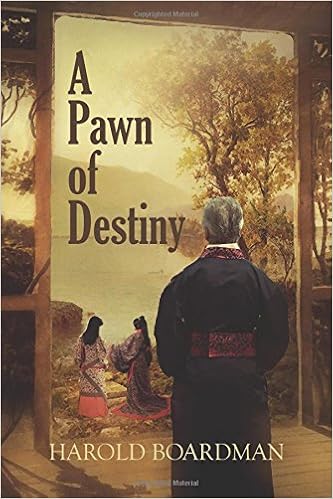
Review: A Pawn of Destiny by Harold Boardman

by MK French

Darquin is a young man living in the Roman Empire who is banished from home. He is all but conscripted into the army along with his cousin, and soon travels to faraway lands he didn't think he would ever visit.

Amazon affiliate links are used on this site. A free book was provided for an honest review.

A Pawn of Destiny
September 2017; 978-1520908878
ebook, print (292 pages); historical fiction
The book opens with Darquin's father Kirian being tricked into slavery, his brief time fighting in Spartacus' slave army, and then escape into the countryside. Prior to reading this, I was only aware of Spartacus through the television show. (Very, very not for children, by the way!) As a result, a few of the names and concepts from the early chapters were somewhat familiar. There really wasn't any description at all in the beginning, and events were glossed over with no detail whatsoever, making me feel more like I was reading a history textbook than a novel. I understand that Kirian isn't the main character, but the rest of the book has the similar dry feel to it. Even sex scenes described in detail feels distant, and there is little emotional connection with the characters despite it later being referred to as "a passionate love." More emotion is shown through conversations, which are altogether too brief and scattered sparsely throughout the text.

This novel is obviously very researched, and it's richly detailed. However, the details are more in the locations, movement of troops and how the Roman empire is woven together. There are few physical descriptions of characters, occasionally hair, skin or eye colors, or distinguishing features. Otherwise, characters are referred to by name as actions are flatly given out, one after the other. Even the battles described don't seem very tense or emotionally engaging for me as a reader. For example, we get this: "Sword clashed with sword and the air was filled with grunts, groans, and screams of both men and horses." In the very next sentence, the bandits retreat and leave behind one hundred dead. This could have been a great opportunity to really see what the fighting is like, to feel what they're going through and get a sense of the desperation of those hundred dying men. Instead, it's little more than a footnote that could have been left out. The entire novel is written in this manner, making it very difficult for me to care about any of the events described.

Buy A Pawn of Destiny at Amazon

Born and raised in New York City, M.K. French started writing stories when very young, dreaming of different worlds and places to visit. She always had an interest in folklore, fairy tales, and the macabre, which has definitely influenced her work. She currently lives in the Midwest with her husband, three young children, and golden retriever.

Get even more book news in your inbox, sign up today! Girl Who Reads is an Amazon advertising affiliate; a small commission is earned when purchases are made at Amazon using any Amazon links on this site. Thank you for supporting Girl Who Reads.

October 23, 2017

The Crows of Beara by Julie Christine Johnson #MondayBlogs #TLCBookTours #TheCrowsOfBeara

by Susan Roberts

This is a wonderful new novel about one of my favorite places to visit – Ireland.  The author does such descriptive writing about Ireland that I feel like I’ve been on a mini vacation.  Ireland and environmental issues are the central themes of this novel but the relationship between the two main characters – Annie and Daniel is what makes this novel so memorable.

Amazon affiliate links are used on this site. 

The Crows of beara
September 2017; Ashland Creek Press
978-1618220479; ebook, print; women's fiction
Annie and Daniel are both flawed people trying to forgive themselves for their pasts and define their future selves.  Annie is an alcoholic who is just out of rehab. Her marriage is falling apart and the PR company she works for is getting tired of giving her second chances. Her last chance to keep her job is a PR job in Ireland trying to convince a small town that the new jobs that will be provided by a copper mine are more important than the environmental problems that the mine would cause.  The first person she meets in Ireland is Daniel, a metal artist, who is fighting with the demons in his past and working with many of the people in town who oppose the mining operation.  Despite their differences, Annie and Daniel are drawn to each other. The more Annie sees of the beautiful Beara peninsula, the more she questions the mine owners plans to destroy the environment. Will Annie and Daniel be able to forgive themselves for their pasts and discover happiness in their future?

This a wonderful story about love and redemption, the beautiful country of Ireland and the importance of family.

Buy The Crows of Beara at Amazon

About the Author

Julie Christine Johnson’s short stories and essays have appeared in journals including Emerge Literary Journal; Mud Season Review; Cirque: A Literary Journal of the North Pacific Rim; Cobalt; and River Poets Journal. Her work has also appeared in the print anthologies Stories for Sendai; Up, Do: Flash Fiction by Women Writers; and Three Minus One: Stories of Love and Loss. She holds undergraduate degrees in French and psychology and a master’s in international affairs. Julie leads writing workshops and seminars and offers story/developmental editing and writer coaching services.
Named a “standout debut” by Library Journal, “very highly recommended” by Historical Novels Review, and “delicate and haunting, romantic and mystical” by bestselling author Greer Macallister, Julie’s debut novel In Another Life (Sourcebooks) went into a second printing three days after its February 2016 release. A hiker, yogi, and swimmer, Julie makes her home in northwest Washington state.

Find out more about Julie at her website, and connect with her on Facebook and Twitter. You can also follow her on Instagram and Pinterest.

Also available at Barnes & Noble

Susan Roberts lives in North Carolina when she isn't traveling.  She and her husband enjoy traveling, gardening and spending time with their family and friends.  She reads almost anything (and the piles of books in her house prove that) but her favorite genres are Southern fiction, women's fiction and thrillers. Susan is a top 1% Goodreads Reviewer. You can connect with  her on Facebook.


Get even more book news in your inbox, sign up today! Girl Who Reads is an Amazon advertising affiliate; a small commission is earned when purchases are made at Amazon using any Amazon links on this site. Thank you for supporting Girl Who Reads.

October 22, 2017

Review: Lawless Series by William Sutton

by MK French

A couple of months ago, we featured an excerpt from William Sutton's latest book in the Lawless series. Today, I review all three books in his Victoria crime series.

Amazon affiliate links are used on this site. Free books were provided for an honest review.


Lawless and the Devil of Euston Square (Lawless Book 1) by William Sutton

Lawless and the Devil of Euston Square
May 2016; Titan Books; 978-1785650093
ebook, print (464 pages); historical, crime
Novice detective Campbell Lawless is new to Scotland Yard after helping out with a burst hydraulic pump in the winter of 1859. From there, he discovers more about the underbelly of London, the poor and the elite, and uncovers a plot involving revolutionaries, actresses, and even the royal family. Much of his inquiry has to do with Berwick Skelton, a poor man that became an activist that had disappeared. Finding him forces Lawless to unravel a far more complex network of people and secrets than he thought was possible.

The novel is a Victorian crime drama and is written in that style and with that pacing. The language used reflects the period, and the story is told mostly through Lawless' point of view, with accents from newspapers, quotes from notable figures of the day (Charles Dickens and Karl Marx especially).

It's very slow going, and the book is just over 500 pages. This allows you get a feel for the time period and the characters, but it's very dragged out in a lot of places. Yes, the entire book spans over three years, but at some points in the book, it really feels like it and there's not much action or investigation going on.

It definitely gives you a fantastic feel for the time period, and you get a chance to see how investigations were done. There is so much detail in here, you really get immersed in it. If that's the kind of period mystery that you like, this is the book for you.

Buy Lawless and the Devil of Euston Square at Amazon


Lawless and the Flowers of Sin (Lawless Book 2) by William Sutton

Lawless and the Flowers of Sin
July 2016; Titan Books; 978-1785650116
ebook, print (464 pages); historical, crime
After the events at Euston Square, Detective Lawless continued to work in Scotland Yard. He was assigned a number of drab cases before being reassigned as the Inspector of Vice. In this position, he has to make a tally of all the bordellos in London, and collect the stories of the women who work there. Along the way, he became friends with an elderly musician that established a foundation for fallen women, in an effort to give women an option if they wanted to leave the bordellos. However, powerful men throughout London frequent the higher end bordellos and bookshops, and have no interest in letting Lawless unravel the network they painstakingly put together.

This novel refers to some events in the first one, such as Lawless's resentment at being stuck doing filing and paperwork after he had unraveled the plot of the first mystery. He isn't very interested in this new position as Inspector of Vice, but he makes a number of friends (of sorts) with a few of the prostitutes and honestly cares what happens to them. A great number of his illusions are shattered in the process, which leads him to look further into how a good number of them fell into the oldest profession.

There is no detail given regarding some of the stories, so we're left to fill in the blanks with our own dirty imagination. It's a clever way to go about it because even the outlines of stories and the hints that are given can be too heartrending to imagine someone actually living through.

It's just as atmospheric as the first novel and takes us further into the underbelly of Victorian London.

The story moves along much faster here and doesn't feel as weighed down. The final sections explain the tangled stories of the musician and the woman Lawless saw him with, and seem to serve as an epilogue of sorts. It doesn't explain any future events, not like the final sections of the first novel, but is a gentler conclusion to the tale.

Buy Lawless and the Flowers of Sin at Amazon


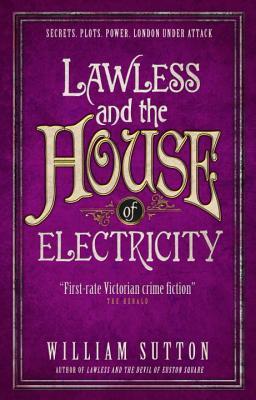
Lawless and the House of Electricity (Lawless Book 3) by William Sutton

August 2017; Titan Books; 978-1785650130
ebook, print (464 pages); historical, crime
Sergeant Campbell Lawless investigates a body that was found on a ship after being dead for years, as well as a series of explosions that don't initially seem connected. The Earl of Roxbury manufactures weapons for England, and the tensions between England and Europe are mounting. Lawless is sent by the Home Office to investigate the explosions, so he sends the ex-street urchin Molly to Roxbury's estate to investigate his estate, which includes a number of experiments, electrical contraptions, and a number of scientists working with him.

Instead of being primarily Lawless's point of view with a smattering of telegrams or newspaper clippings, the story here bounces between his point of view, Molly's letters and telegrams, and some missives from Ruth Villiers. Because Lawless has to stay in London, this helps us see what happens at Roxbury's estate. Just as in the second novel in this series, a lot of it is then left to our imagination from the hints given in the text.

The alternating texts do reveal the fact that there are two mysteries at play at once, some of which can be guessed ahead of time.

This story is just as tangled as prior ones, yet feels less oppressively dense. Once the stories fully unfold in the later sections of the novel, they're revealed to be almost gothic in nature. I found this novel to be the most enjoyable of the three.

Buy Lawless and the House of Electricity at Amazon


Born and raised in New York City, M.K. French started writing stories when very young, dreaming of different worlds and places to visit. She always had an interest in folklore, fairy tales, and the macabre, which has definitely influenced her work. She currently lives in the Midwest with her husband, three young children, and golden retriever.


Get even more book news in your inbox, sign up today! Girl Who Reads is an Amazon advertising affiliate; a small commission is earned when purchases are made at Amazon using any Amazon links on this site. Thank you for supporting Girl Who Reads.

October 21, 2017

Review: Christmas at Little Beach Street Bakery by Jenny Colgan

by Susan Roberts


This is the third book in the Little Beach Street Bakery trilogy by Jenny Colgan. It can be read as a stand-alone with no confusion but it's such a good series that I think you need to read them all!

Amazon affiliate links are used on this site. A free book was provided for an honest review.

Christmas at Little Beach Street Bakery
October 2017; William Morrow; 9780062697844
ebook, audio, print (320 pages); holiday, romance
In Christmas at Little Beach Street Bakery, we go back to Mount Polbearne, a small isolated island in Cornwall, England just as the Christmas season is beginning. Polly is the town baker and is trying to keep up with demand from the townspeople plus spend enough time with her boyfriend Huckle and their pet Puffin Neil. Polly and Huckle are having problems with money after they bought a lighthouse to live in that won't stay warm in the winter and needs a lot of work done. To make extra money, Polly agrees to cater the Christmas celebration for her best friends very rich and very obnoxious husband. Anything that can go wrong with her plans and her romance, goes wrong during the weeks leading up to Christmas. Will Polly be able to overcome the stresses on her life and live happily ever after?

This is a great book to read full of love and family and the quirky and often very funny people of the town. I enjoyed the entire series and hate to know that this is the end of our stories about Polly and Huckle and their pet puffin.

Buy Christmas at the Little Beach Street Bakery at Amazon


Other Books by Jenny Colgan:

Little Beach Street Bakery 
Summer at Little Beach Street Bakery
The Cafe by the Sea
The Bookshop on the Corner


For more about Jenny, visit her website and her Facebook page, or follow her on Twitter.


Susan Roberts lives in North Carolina when she isn't traveling.  She and her husband enjoy traveling, gardening and spending time with their family and friends.  She reads almost anything (and the piles of books in her house prove that) but her favorite genres are Southern fiction, women's fiction, and thrillers. Susan is a top 1% Goodreads Reviewer. You can connect with her on Facebook, Goodreads or Twitter.


Get even more book news in your inbox, sign up today! Girl Who Reads is an Amazon advertising affiliate; a small commission is earned when purchases are made at Amazon using any Amazon links on this site. Thank you for supporting Girl Who Reads.

October 20, 2017

The Important Role of Minor Characters

by Donna Huber


Minor characters are often overlooked or just given a cursory mention in reviews - "the secondary characters supported the main characters well". However, they often play a crucial role in plot and/or main character development. With the trend towards ensemble casts with multiple protagonists, minor characters are relegated to the shadows even more. Yet, without these characters, the stories wouldn't be half as good.

Amazon affiliate links are used on this site.

I would love to know who some of your favorite minor characters are. Tell me in the comments!

The brilliance of minor characters is sometimes not realized until the book is re-read as the reader is rightfully caught up in the main actions and main characters. While other times we connect so well with a minor character that we hope that they get their own spin-off series.

(For the purpose of this article, I'm lumping supporting and minor characters together.)

Why Minor Characters are Special

In the opening paragraph of his Writer's Digest article What is a Minor Character: Understanding the Minor Characters' Role. Orson Scott Card states,

"You must know—and let your readers know—which characters are most important to the story (i.e. the major characters), so they’ll know which are worth following and caring about, and which will quickly disappear (i.e. the inconsequential placeholders)"

But truthfully, minor or supporting characters are often passing figures that for any number of reasons catch our eyes. We can come to care for them just as much as we do the main characters. In some instances, we are more drawn to a minor character than the main character. Just take a look at the number of fanfiction stories that have thrust a minor character into a leading role.

3 reasons we are drawn to minor characters:


  1. Delivers a particularly witty, poignant, or otherwise memorable line.
  2. We recognize something of ourselves in them.
  3. They provide key information on the plot or insight into the main characters, particularly true for foils.
I believe a great writer can and should breathe as much life into their minor characters as they do their main characters. As the saying goes, no man is an island unto himself. Therefore the more real the minor characters are the richer the whole story becomes. It will make readers want to delve back into a book again and again to mine for those undiscovered gems.

A Closer Look at Specific Minor Characters

Neville Longbottom and Luna Lovegood - Harry Potter

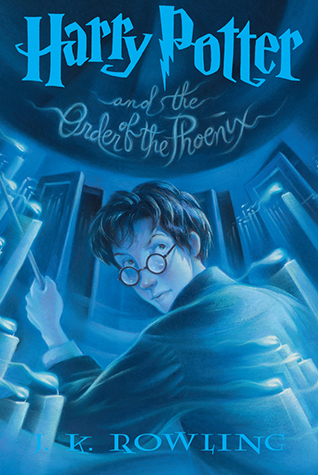
Harry Potter and the Order of the Pheonix
Arguably, the Harry Potter has one of the largest ensemble cast of characters and at times it is difficult to distinguish who is a minor and who is a major character. If we go with a strict definition of any character that is not Harry, Ron, or Hermoine is a minor character then we are left with a multitude of favorite characters - the whole Weasley clan, Colin Creavy, Kingsley Shackbolt, just to name a few.

For more two minor/supporting characters truly stand out - Neville and Luna. Luna became a fan favorite from the moment she graced the pages in the 5th Potter book, Harry Potter and the Order of the Phoenix. Her strangeness is almost endearing, but it is really her uncanny ability to state what everyone is thinking but not willing to say out loud. She also provides comic relief at a point where the books become markedly darker. Interestingly, she is the only student that fights at the Ministry of Magic who is not a Gryffindor. She is a Ravenclaw, distinguished by their wisdom and cleverness. For many readers, she could represent their desire for labels not to define them.

I'm not sure in the beginning if Neville received the fan support he deserved. Sure he is singled out by Dumbledore at the end of the 1st book, but did that really mark him as a minor character to watch for? For me, Neville embodies the regular person. For most people, particularly at the age of 11 are awkward and more inept at things. How many of us still had our baby fat at that age? Or were the one that was targeted by the school bully? Probably for most of us, we wondered why such a boy was chosen for Gryffindor, surely he was more suited for Hufflepuff. Yet, by the end of the book 1 we see that it is what is on the inside, that which is often not seen, that really matters.

As we go through the series, Neville is always on the outskirts, tagging along. Like most of us, he wants to be part of the fight against evil but hasn't quite got the confidence to lead the charge. Or perhaps he didn't mind living in the shadows of Harry, Ron, and Hermoine. I know for me I will often let others lead, but like Neville, I'm capable of stepping up when necessary. It is probably why Neville's killing of the snake is so triumphant (and if you have only watched the movies, that scene is so much more satisfying in the book.)


Gallowglass and Sophie - All Souls Trilogy

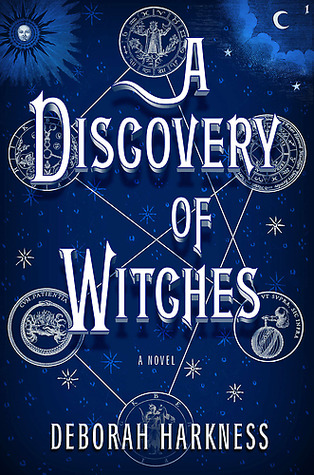
A Discovery of Wtiches
It was actually during my recent re-read of Deborah Harkness's All Souls Trilogy that I really got to thinking about the importance of minor characters. The 2nd book in the series, Shadow of Night, is peppered with prominent historical characters, but it is two completely fictional minor characters that really jumped off the page for me.

Like Luna, Gallowglass is an instant fan favorite. So many fans have hoped for spin-off series or at least a novella featuring Gallowglass. After reading the series for the first time, hands down Gallowglass was my favorite character. However, it was during my recent re-read that I really took notice of Sophie.

I'm not sure if I have ever noticed her quite as much before. Compared to Gallowglass, Sophie does not have a lengthy part. However, her appearance towards the end of A Discovery of Witches is important in moving the plot forward. And not just because she brings with her the chess piece that allows them to know when and where they should go. It is probably the wit and cleverness in which she delivers her lines that makes her so memorable, some of which you won't recognize until you have completed the trilogy. But for this go around, for me, it was the levity that she inserted into the story that made me take notice. At the point she where she enters the story, everyone knows just how much danger Diana and Matthew are in and the characters are on the verge of letting fear paralyze or divide them. Sophie is like a breath of fresh air. I actually giggled at some of her lines. She doesn't diminish the seriousness of the situation, but instead provides a different perspective and infuses some hope into it.


All Characters are Important

For me, a great story has to have great characters. I will forgive a lot in the writing and plot if I fall in love with the characters. And it is often the minor and supporting characters that make or break the story - even if their role isn't fully realized during the first read.

What books have you read where the minor characters really enhance the story? Are there any minor characters who you have liked more than the main characters?
Donna Huber is an avid reader and natural encourager. She is the founder of Girl Who Reads and the author of how-to marketing book Secrets to a Successful Blog Tour.


Get even more book news in your inbox, sign up today! Girl Who Reads is an Amazon advertising affiliate; a small commission is earned when purchases are made at Amazon using any Amazon links on this site. Thank you for supporting Girl Who Reads.

Shareahollic